Destinations
Shandong Coast Itinerary: Qingdao, Weihai, Yantai and Jinan
Plan a first Shandong coast route with Qingdao, Weihai, Yantai, Penglai, Jinan, high-speed rail, beach weather, payment setup, and realistic five-, seven-, or ten-day pacing.
Quick Answer
A first Shandong coast itinerary works best as a rail-first route: start in Qingdao for the easiest soft landing, add Weihai for slower sea views, use Yantai or Penglai for the myth-and-wine side of the coast, then finish in Jinan if you have time for springs, food, and onward high-speed rail. Five days is enough for Qingdao plus one coast city. Seven days can cover Qingdao, Weihai, and Yantai without turning every day into a transfer. Ten days is the right shape for a fuller Qingdao-Weihai-Yantai-Jinan loop. Book trains in 12306, save Chinese place names in AMap, prepare Alipay or WeChat Pay, and keep one weather buffer because sea fog, wind, rain, and holiday crowds can change the best order.
Best Option by Scenario
| Scenario | Best option | Notes |
|---|---|---|
| Five-day coast sampler | Use Qingdao as the base, then choose Weihai for slower bays or Yantai/Penglai for historic coast and wine context. | Do not force Jinan into five days unless it is your arrival or exit city. |
| Seven-day coastal route | Spend two to three nights in Qingdao, one to two nights in Weihai, and one to two nights in Yantai or Penglai. | This is the best version for travelers inspired by summer coast and budget-route posts. |
| Ten-day first Shandong loop | Use Qingdao, Weihai, Yantai or Penglai, and Jinan, with one open buffer day for weather, train timing, or a slower food day. | This is closest to the user-provided Shandong route inspiration but adapted for foreign-visitor logistics. |
| Transit or visa-free traveler | Check the current 240-hour transit policy, eligible ports, passport rules, and onward-ticket requirement before treating Shandong as visa-free. | Policy details change; use official sources, not itinerary posts, for eligibility. |
Detailed Guide
Shandong is a strong first-China region when you want coast, seafood, high-speed rail, and a route that feels different from the Beijing-Shanghai-Xi’an default. The trap is copying a local social-media budget route too literally: Chinese travelers may move faster, use different booking apps, accept tighter hotel transfers, and tolerate more food-and-transport uncertainty than a first-time foreign visitor should.
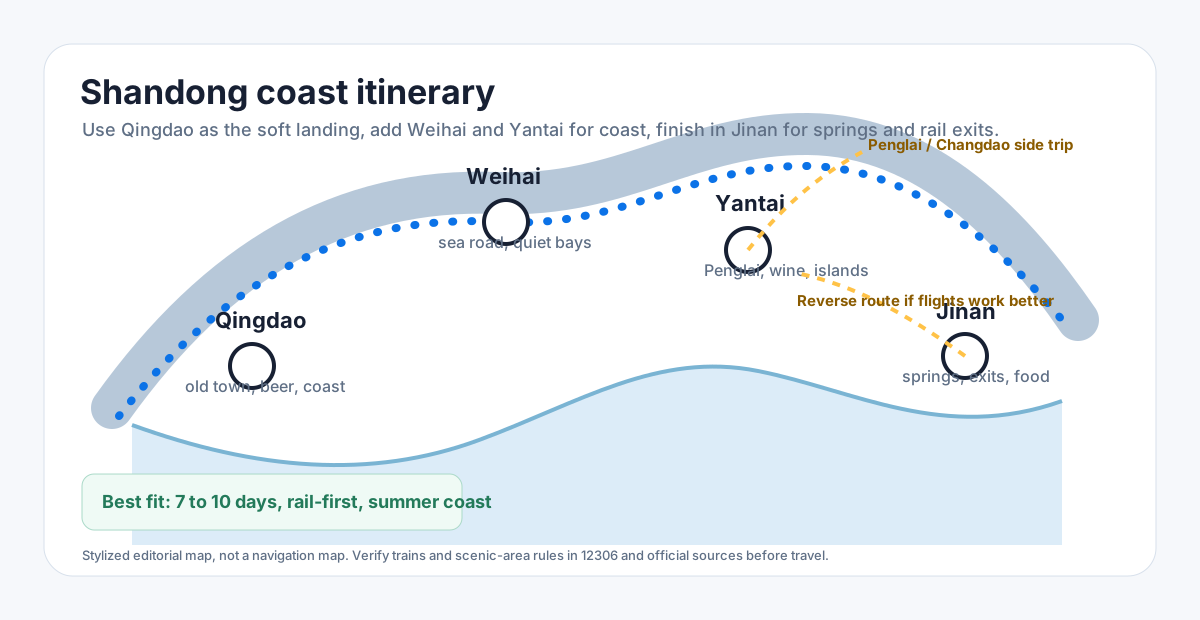
The Xiaohongshu material Steven provided is useful because the shape is clear: Qingdao, Weihai, Yantai, and Jinan in one Shandong trip, with the promise of scenery and manageable cost. This English guide keeps the route idea but removes the risky part: it does not promise one fixed budget, one perfect order, or one attraction list that works for every passport, flight, weather window, and payment setup.
Best Route Shape
For most first-time visitors, start in Qingdao. It has the best soft landing in this cluster: major airport, metro, old town walks, seafront, Beer Museum, seafood, and an existing Siye China city guide you can use for the first two or three days. China Daily’s government-hosted Shandong itinerary also treats Qingdao as the starting point before moving toward Weihai.
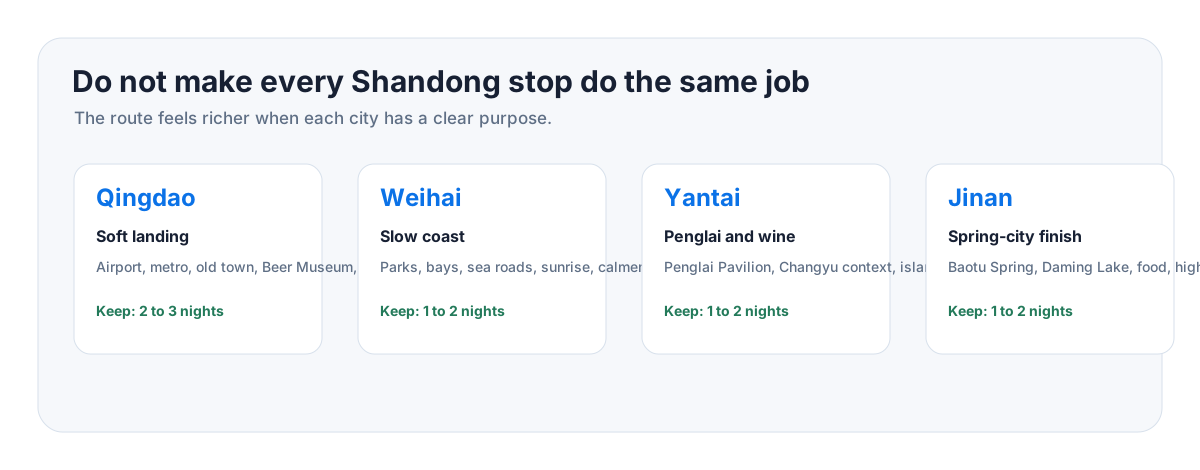
After Qingdao, choose your pace. Weihai is the better slow-coast stop: sea roads, parks, bays, and a calmer feel. Yantai is the better historic-and-side-trip stop: Penglai, wine culture, islands when weather and ferry logistics work, and another coastal food base. Jinan is not a beach city; it is the spring-city finish, useful when you want Baotu Spring, Daming Lake, local food, and onward high-speed rail.
Five, Seven, Or Ten Days
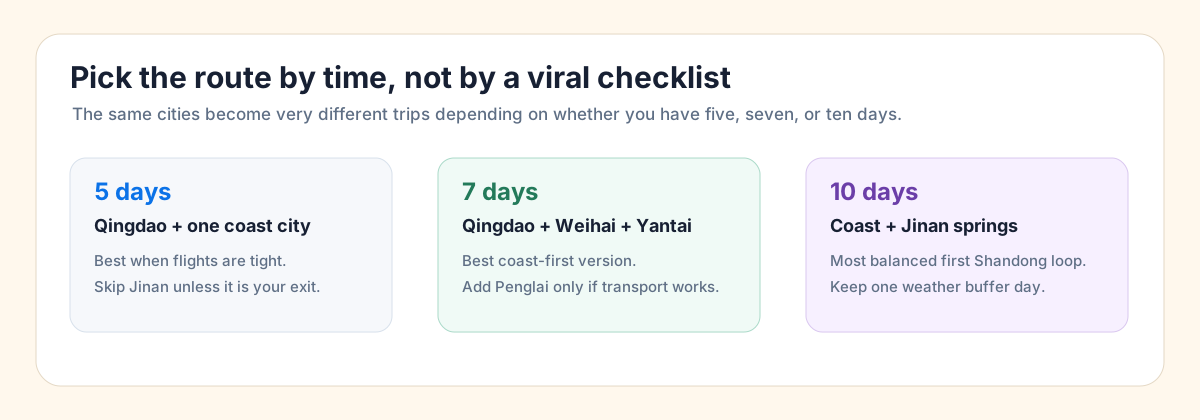
If you only have five days, do Qingdao plus one other city. Qingdao plus Weihai is the easiest coast-first version. Qingdao plus Yantai or Penglai is better if you care about mythic coastline, wine history, or a more distinctive story than “another beach city.” Do not add Jinan unless flights, trains, or family logistics make it necessary.
For seven days, use Qingdao, Weihai, and Yantai. Keep Qingdao at two or three nights, then split the rest between Weihai and Yantai. This is the version most directly inspired by the summer-coast and budget-route material: scenic, not too famous internationally, and strong for travelers who want a cooler-feeling alternative to hotter inland city loops.
For ten days, add Jinan and one buffer day. The buffer is not wasted. It protects the trip from sea fog, rain, delayed trains, attraction booking friction, holiday crowds, and the very real possibility that you enjoy a coastal city more than expected and want to stay slower.
Rail And App Setup
Book intercity trains before the route becomes emotional. The government-hosted China Daily Shandong route notes that Qingdao North to Weihai takes about two hours, but live schedules, station names, seat availability, and holiday demand should be checked in 12306 or a trusted booking channel. Do not assume “Qingdao,” “Qingdao North,” and “Qingdao West” are interchangeable.
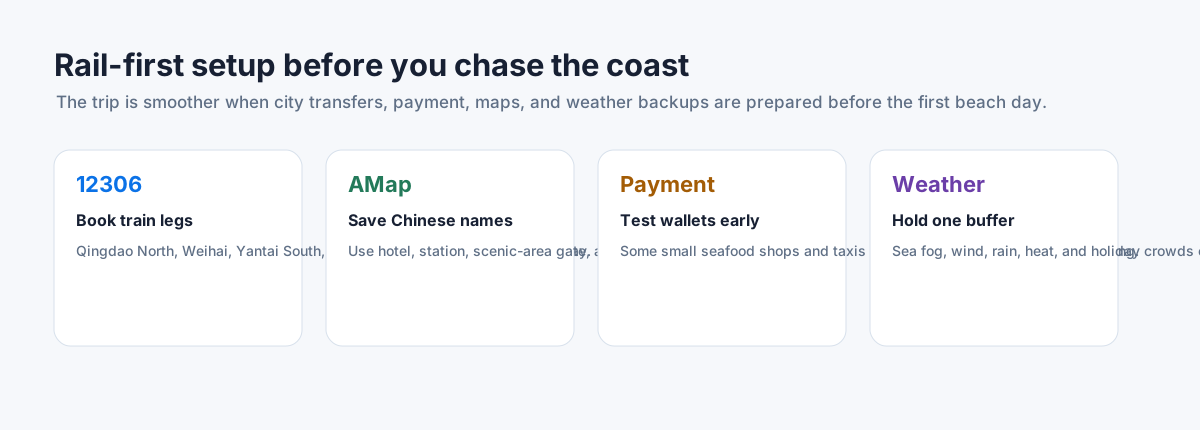
Save Chinese place names in AMap before you leave the hotel: city names, station names, scenic-area gates, restaurants, and your next hotel address. Google Maps can help with general orientation, but the on-the-ground pickup point, walking route, and restaurant branch are usually easier in a local map app.
City-by-City Pacing
Use Qingdao for your first practical reset. Spend the first full day around the old town, Zhanqiao, Signal Hill or Xiaoyushan, and Beer Museum. Use the second day for Badaguan, May Fourth Square, Xiaomaidao, seafood, and weather-dependent coast. Add Laoshan only if you can give it most of a day.
Use Weihai when you want the trip to breathe. The value is not one single must-see checklist; it is the rhythm of sea parks, bays, coastal roads, morning or sunset walks, and a less intense stop between Qingdao and Yantai. Treat viral viewpoints as leads, not guarantees, because wind, construction, traffic controls, and crowd behavior can change the experience.
Use Yantai when you want the route to have a different texture. Penglai Pavilion gives the city cluster a mythic and historic side, while wine culture and island decisions make it feel different from Weihai. If you add Changdao or another island, verify ferry status, weather, luggage practicality, and whether the side trip steals too much time from the main route.
Use Jinan as a finish, not a filler. The spring-city block should include Baotu Spring, Daming Lake, Black Tiger Spring or the old-city moat area, plus a slower meal. China Daily’s government-hosted directory describes the World’s Best Spring Scenic Area as composed of the moat, Daming Lake, Baotu Spring, Black Tiger Spring, and Five Dragon Pool; that is the reason Jinan deserves a real day if it appears in the route.
Food, Budget, And Reality Checks
Shandong food can be one of the joys of the route, but do not turn a budget post into a promise. Seafood prices, hotel level, train seats, summer weekends, festival periods, and foreign-card friction can change the cost quickly. Use the 3.3k-style budget framing as a sign that the route can be affordable by Chinese domestic-travel standards, not as a guarantee for an English-language visitor.
For food planning, keep the cities distinct. Qingdao is the beer and seafood landing. Weihai is good for simple seafood and coastal meals. Yantai can lean into seafood, Penglai, and wine context. Jinan is where you should look harder at Shandong cooking beyond the coast: broths, braises, wheat-based foods, and spring-city neighborhood meals.
Transit Policy Caution
Shandong can be attractive for transit-style planning because official China Daily Shandong material has highlighted 240-hour transit access through listed gateways such as Jinan Yaoqiang International Airport, Qingdao Jiaodong International Airport, Yantai Penglai International Airport, Weihai Dashuipo International Airport, and Qingdao passenger port. Treat that as a planning lead, not permission.
Before relying on visa-free transit, verify your passport, port, arrival and departure countries or regions, onward ticket, stay limit, allowed travel area, and current border implementation. If any part is unclear, plan the route as a normal China trip first and solve the entry requirement separately.
Image Credits
Article diagrams are custom SVG assets created for Siye China. The homepage destination card uses a locally saved and cropped Yantai coastline photo from Wikimedia Commons: Yantai2017.jpg by HaoLinFotos, licensed under CC BY-SA 4.0.
Step-by-Step Checklist
- 1Pick the route length firstChoose five, seven, or ten days before listing sights. Shandong is easy to overpack because the cities look close on a map.
- 2Book rail legs earlyUse 12306 or a trusted booking channel for Qingdao, Weihai, Yantai, and Jinan legs; station choice can matter as much as city choice.
- 3Save Chinese namesSave Qingdao/青岛, Weihai/威海, Yantai/烟台, Penglai/蓬莱, Jinan/济南, Baotu Spring/趵突泉, Daming Lake/大明湖, and your hotel addresses in AMap.
- 4Use payment backupsPrepare Alipay or WeChat Pay, but keep a backup card and some cash for smaller seafood restaurants, taxis, ferries, and edge cases.
- 5Hold one weather bufferCoast days can be changed by sea fog, wind, rain, heat, beach notices, or holiday crowd controls.
- 6Verify official policyIf you rely on visa-free transit or port eligibility, verify with current official notices before booking nonrefundable plans.
What to verify before you go
- Opening hours for attractions, restaurants, museums, parks, and evening viewpoints.
- Booking rules, including real-name reservation, timed entry, app-only tickets, and cancellation windows.
- Passport or ID requirements for hotels, trains, attractions, border crossings, and ticket pickup.
- Payment method accepted on the exact route or venue, plus a backup card, cash, or app wallet.
- Weather, heat, rain, air quality, and whether outdoor stops still make sense that day.
- Transport changes, metro closures, traffic controls, ferry or shuttle timing, and last-train options.
Common Mistakes
- Copying a Chinese budget route without adapting it for first-time foreign visitors. Keep the route inspiration, but add app setup, train booking, payment, passport, hotel-address, and weather buffers.
- Adding every coastal city because train times look short. Each transfer still consumes packing, station, waiting, and hotel-check-in time. Cut one city before cutting sleep.
- Treating Weihai and Yantai as the same beach stop. Use Weihai for slower coastal roads and sea parks; use Yantai/Penglai for historic coast, wine, islands, and myth context.
- Assuming Jinan is just an airport or train exit. If you include Jinan, give it at least one real spring-city block around Baotu Spring, Daming Lake, and local food.
FAQ
How many days do I need for Qingdao, Weihai, Yantai, and Jinan?
Seven days is the minimum comfortable version if you skip Jinan or keep it only as an exit. Ten days is better for a full Qingdao-Weihai-Yantai-Jinan route with one buffer day.
Should I start in Qingdao or Jinan?
Start in Qingdao if you want the coast first and an easier tourist soft landing. Start in Jinan if your flights or high-speed rail connections are better there, then work east toward Qingdao or Yantai.
Is Shandong good for July and August travel?
The coast can feel more appealing than hotter inland cities, but summer still brings heat, humidity, rain, sea fog, and beach crowds. Build the trip around flexible morning and evening coast blocks.
Can foreign tourists use Shandong's 240-hour transit policy?
Some travelers may be eligible through listed Shandong ports, but eligibility depends on passport, route, onward ticket, port, and current rules. Verify official notices before using the policy as the basis for the trip.
Is this a budget itinerary?
No. It was inspired by a Chinese budget-route post, but this English version is a planning guide. Prices, hotel standards, food habits, and booking channels vary too much to promise a fixed total cost.
Sources and Update Notes
- User-provided Xiaohongshu Shandong route inspiration Steven provided this as trend and itinerary inspiration on June 4, 2026; the visible shared title described a Qingdao, Weihai, Yantai, and Jinan solo Shandong trip. It is treated as demand signal and route inspiration, not as a factual source for transport, policy, or prices.
- Explore E China's Shandong province in 10 days | govt.chinadaily.com.cn Government-hosted China Daily source checked on June 4, 2026 for Qingdao, Weihai, Shandong 10-day routing context, Qingdao sights, and the Qingdao-to-Weihai rail planning note.
- Explore Shandong with 240-hour transit access | China Daily Shandong Provincial China Daily source checked on June 4, 2026 for Shandong 240-hour transit-access framing and listed gateways including Jinan, Qingdao, Yantai, Weihai, and Qingdao passenger port.
- Peninsula No 1 tourism project unveils Shandong's coastal charm China Daily Shandong source checked on June 4, 2026 for coastal-belt context across Yantai, Qingdao, Weihai, and Rizhao.
- World's Best Spring Scenic Area, Jinan | govt.chinadaily.com.cn Government-hosted China Daily source checked on June 4, 2026 for the World's Best Spring Scenic Area components: the moat, Daming Lake, Baotu Spring, Black Tiger Spring, and Five Dragon Pool.
- Jinan, a City of Springs | English Jinan Jinan municipal English site checked on June 4, 2026 for current city context, foreigner-facing navigation, and culture-tourism entry points.
- Reddit Shandong and Weihai travel discussions Public discussion checked on June 4, 2026 as qualitative demand signal only; it shaped the warning that Shandong is less familiar to many foreign visitors and that Qingdao, Weihai, and Jinan need distinct roles.
- Wikimedia and custom image credits Homepage card uses Yantai2017.jpg by HaoLinFotos from Wikimedia Commons under CC BY-SA 4.0, cropped and saved locally. Article diagrams are custom SVG assets created for Siye China.
