Apps
Does Google Maps Work in China? What Tourists Should Use Instead
Google Maps is not reliable enough for mainland China travel. Learn when it may load, what breaks, and which map apps to prepare instead.
Quick Answer
Google Maps is not reliable enough to use as your main map in mainland China. The app or website may load when your connection routes outside mainland filtering, but Google services can be disrupted, and Maps is weak for local navigation: transit data, business listings, Chinese place names, entrances, station exits, and ride-hailing pickup points are often less useful than local map apps. For a mainland China trip, install AMap, also called Gaode Maps, before departure and save hotel and attraction addresses in Chinese. iPhone users can also keep Apple Maps as a backup. Google Maps can still help with broad planning before travel or Hong Kong and Macau routes, but do not make it your only on-the-ground map.
Best Option by Scenario
| Scenario | Best option | Notes |
|---|---|---|
| Mainland China city navigation | Use AMap as your primary map and keep exact Chinese addresses saved. | It is better suited to local search, transit, traffic, station exits, and pickup points. |
| iPhone traveler who wants an English interface | Use Apple Maps as a practical backup, but still install AMap for deeper local detail. | Apple lists many Maps features for mainland China, while AMap remains useful for Chinese names and local context. |
| Trip planning before departure | Use Google Maps for rough orientation only, then verify important places in a China-friendly map. | Do this before you rely on a route, address, or business listing on arrival day. |
| Hong Kong, Macau, and mainland China in one trip | Google Maps may be useful outside mainland China, but switch to AMap or Apple Maps for the mainland segment. | Keep separate saved addresses for border crossings, railway stations, hotels, and airports. |
Detailed Guide
For mainland China travel, treat Google Maps as a planning aid, not an arrival tool. The practical question is not only whether a map tile can appear. It is whether the app can search the place you need, route you to the correct entrance, show current transit, handle Chinese names, and keep working when your data connection changes.
Google Maps can still be useful before departure. It is familiar, easy to share with travel companions, and helpful for broad geography. But once you are on the ground in mainland China, the higher-risk tasks should move to a China-friendly map app: finding a hotel driveway, choosing the right subway exit, checking bus or metro routes, showing a driver the destination, or confirming which branch of a restaurant you booked.
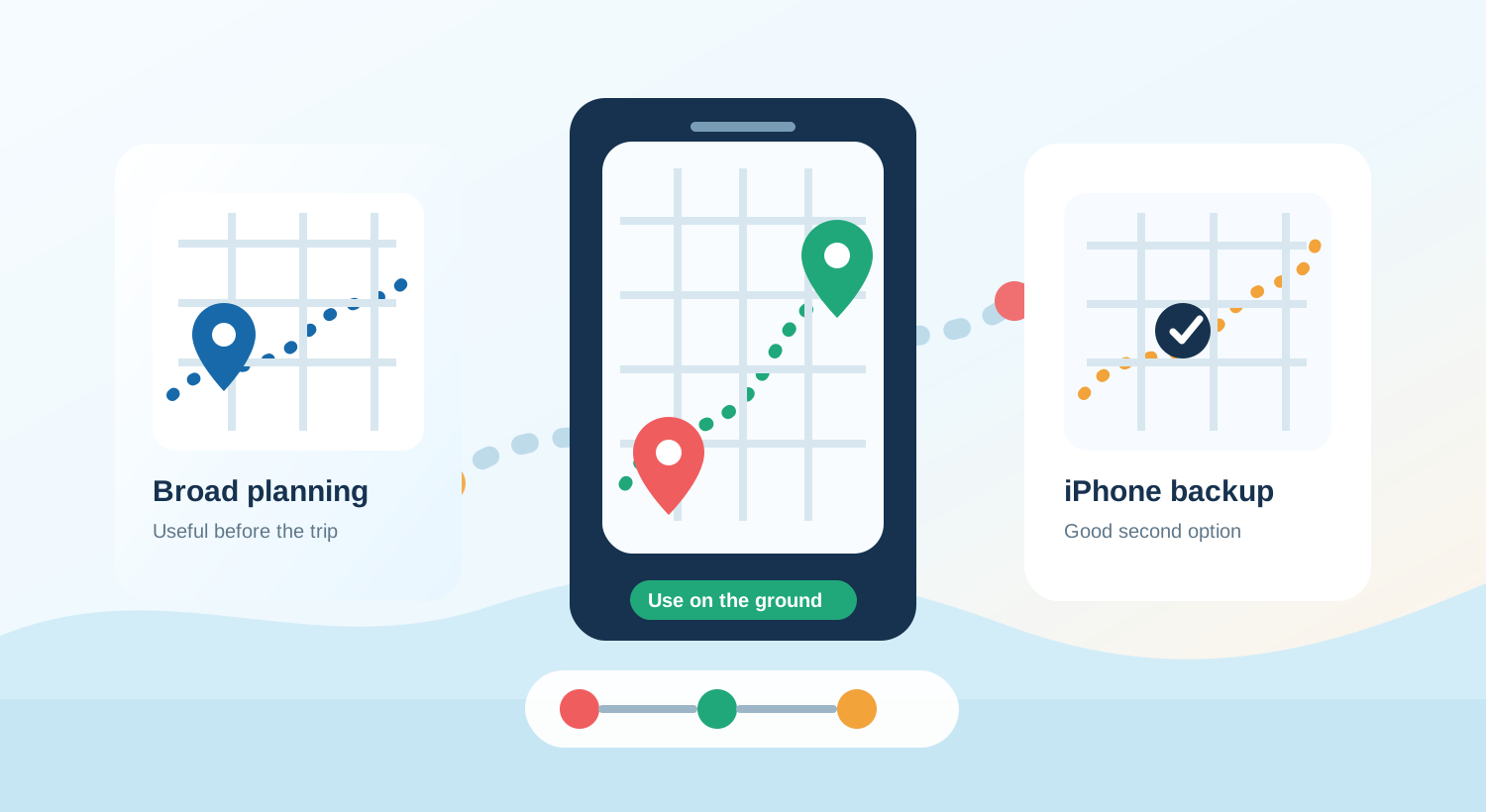
Treat Google Maps as the planning layer, then use a China-friendly map app for the route you will actually follow.
What To Use Instead
AMap, also known as Gaode Maps, should be the first map app most visitors prepare. It has stronger mainland China place data, route options, local traffic context, station details, and pickup-point logic than Google Maps. The English experience is improving, but Chinese names still matter, so save important places as Chinese text as well as map pins.
Apple Maps is a useful fallback for many iPhone users, especially if you prefer an English interface. It can be enough for simple walking, driving, and transit checks, but AMap is still worth keeping for harder local searches, precise entrances, and Chinese place names.
If you can read Chinese, Baidu Maps and Tencent Maps are also viable. For most short-stay English-speaking tourists, the practical setup is simpler: AMap first, Apple Maps if you use iPhone, and Google Maps only as a backup reference.
How To Prepare Addresses
Save the boring details before you need them. Your hotel confirmation should give you a Chinese hotel name and address. Copy both into a note, screenshot them, and test the location in AMap or Apple Maps. Do the same for airports, railway stations, attractions, restaurants with reservations, and meeting points.
Large places in China often have several entrances, gates, exits, or branches. A pin for a railway station is not the same as the right entrance for your train. A mall name is not the same as the restaurant branch inside that mall. When a booking page, hotel, or official attraction page gives you a specific Chinese address, use that exact address.
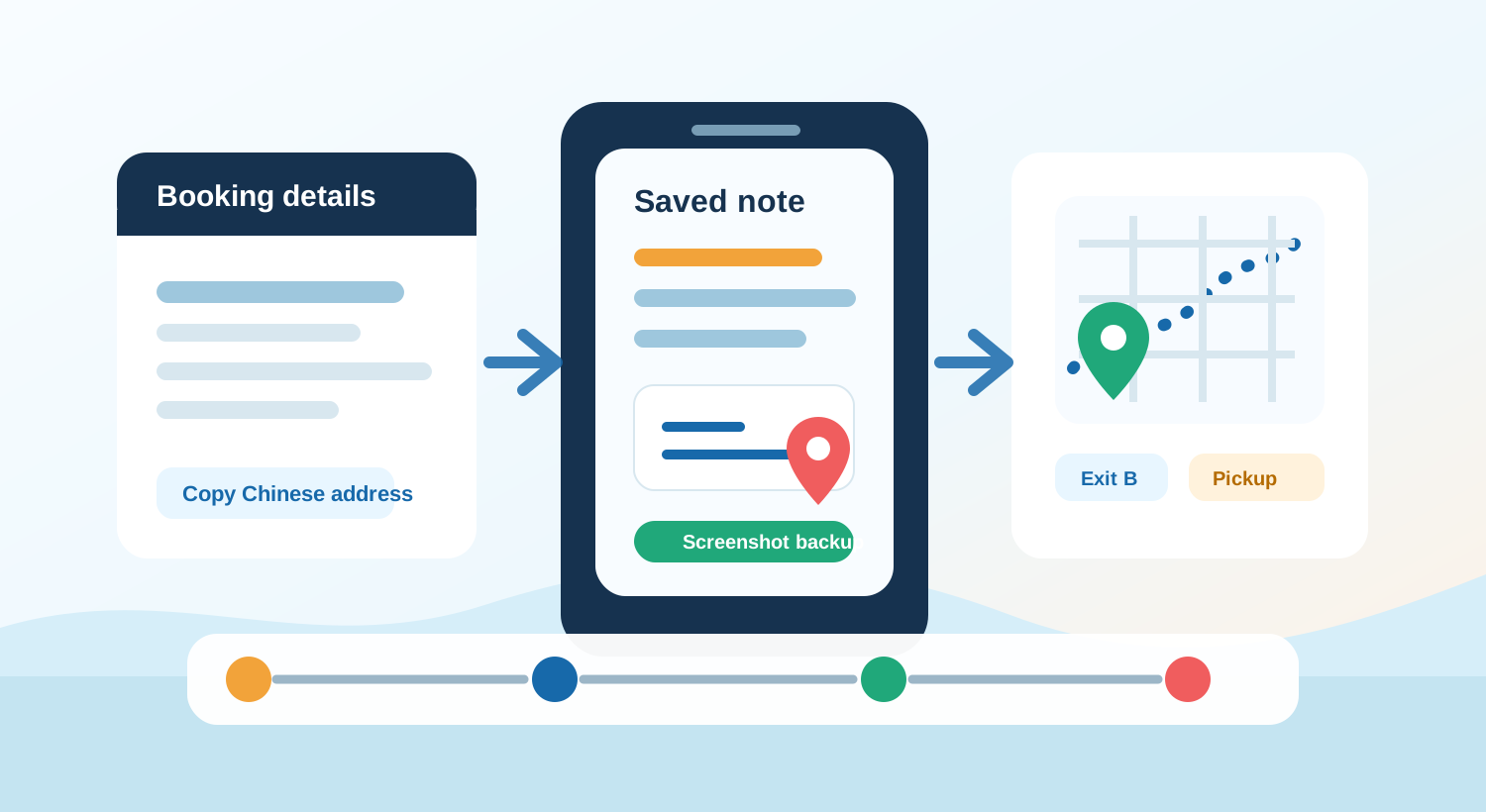
The safest map workflow is boring: copy the Chinese address, save a screenshot, and verify the exact gate, exit, or pickup point.
Connectivity Still Matters
If you expect to use Google services in mainland China, check how your essential apps will work before departure and keep a backup connectivity plan. Depending on your setup, Google Maps may fail to load, load slowly, or work only when your traffic routes outside normal mainland access paths, and working access still does not make Google Maps a better local China map.
Offline Google Maps is not a full solution. Google’s own help notes that offline use has important limits, including no transit, bicycling, or walking directions when offline, and no traffic or alternate routes for driving. For China travel, offline screenshots plus a local map app are more dependable than relying on a downloaded Google map.
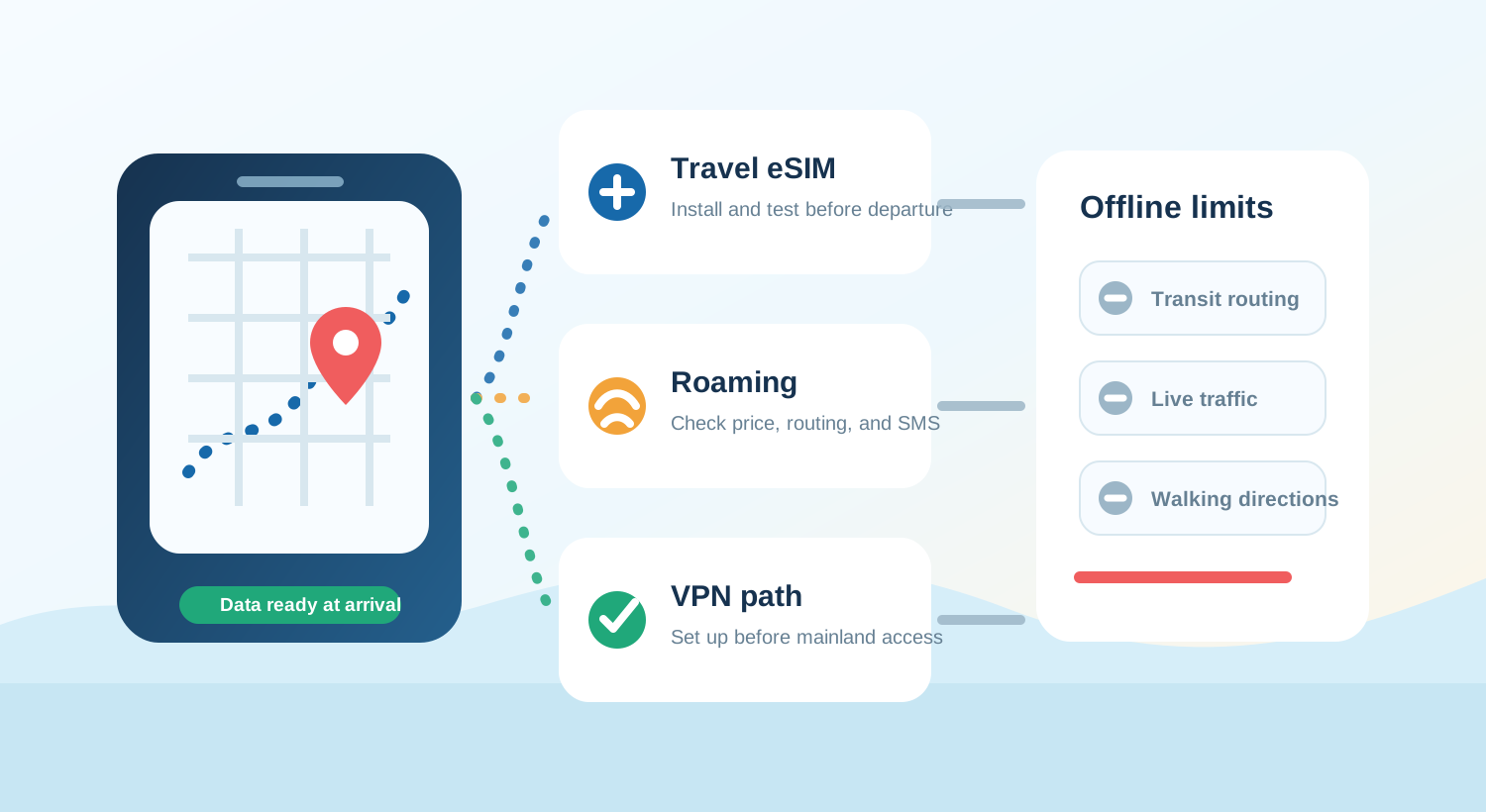
Connectivity can change whether Google services load, but it does not replace local map data or live route features.
Hong Kong, Macau, And Mainland China
Hong Kong and Macau are different from mainland China for this question. Google Maps is usually more useful there, and many travelers can use it normally for transit and local search. The problem starts when you plan the mainland part of the trip as if it will behave the same way.
If your itinerary includes Hong Kong, Macau, Shenzhen, Guangzhou, Shanghai, Beijing, or other mainland cities, prepare both modes. Use Google Maps where it works well, then switch to AMap or Apple Maps for mainland China navigation. Keep Chinese addresses ready for every border crossing, railway station, hotel, and first-day destination.
The Practical Answer
Do not delete Google Maps, but do not depend on it. Use it for broad planning, familiar saved lists, and non-mainland parts of the trip. For mainland China, install AMap before departure, keep Apple Maps ready on iPhone, save Chinese addresses, and prepare mobile data that works from the moment you land.
Step-by-Step Checklist
- 1Install AMap before departure.Open the app once, check the language setting, and test searches for your first hotel and airport.
- 2Save Chinese addresses.Keep your hotel, airport terminal, railway station, and first attractions as Chinese text and screenshots.
- 3Verify important pins in more than one app.Check the exact branch, gate, entrance, or station exit before using a saved place for navigation.
- 4Prepare reliable mobile data.Check how your essential apps will work before departure and keep a backup connectivity plan.
- 5Keep offline copies outside the map app.Screenshot addresses, booking confirmations, phone numbers, and nearby landmarks in case map search fails.
Common Mistakes
- Assuming that a loading map means Google Maps is reliable for China. Test local search, transit, walking routes, and exact Chinese addresses, not just whether the map opens.
- Searching only with English place names. Copy Chinese names from hotel confirmations, official attraction pages, Trip.com bookings, or AMap results.
- Waiting until arrival to install map apps. Install and open your map apps before departure while app stores, SMS, and account recovery are easier.
- Saving only one generic pin for a large place. Save the exact entrance, terminal, station exit, mall branch, or hotel driveway you need.
FAQ
Is Google Maps blocked in China?
On many mainland China connections, Google services can be inaccessible or disrupted. Check how your essential apps will work before departure and keep a backup connectivity plan, and do not rely on Google Maps as your only map.
What map app should tourists use in China instead?
Most tourists should start with AMap, also called Gaode Maps. iPhone users can also use Apple Maps as an English-friendly backup. Baidu Maps and Tencent Maps can be useful if you can handle Chinese interfaces.
Does Google Maps work in Hong Kong and Macau?
Google Maps is generally more useful in Hong Kong and Macau than in mainland China. If your trip crosses into mainland China, prepare AMap or Apple Maps for that part of the itinerary.
Can offline Google Maps solve the China problem?
No. Offline Google Maps can help with limited downloaded areas, but it does not solve access, live traffic, public transit, walking directions, local business data, or Chinese-address accuracy.
Is Apple Maps better than Google Maps in China?
For iPhone users, Apple Maps is usually a more practical China fallback than Google Maps. Still keep AMap installed because local apps can have richer place data, station exits, pickup points, and Chinese search results.
Sources and Update Notes
- Google product traffic disruptions FAQs Checked May 25, 2026 for Google's explanation of product traffic disruptions, access limits, and government-mandated block examples.
- Google Mainland China service availability Checked May 25, 2026 for Google's China-specific service availability report replacement and disruption-graph context.
- Google Maps Help: Download areas and navigate offline Checked May 25, 2026 for official offline-map limits, including unavailable transit, cycling, walking, traffic, and alternate-route features when offline.
- AMap Global on Google Play Checked May 25, 2026 for AMap Global's English-map positioning, local navigation features, and current app-store availability.
- AMap Global on the App Store Checked May 25, 2026 for the iOS listing, English language support, navigation category, and recent feature notes.
- Apple iOS and iPadOS feature availability Checked May 25, 2026 for mainland China availability of Apple Maps features such as directions, traffic, lane guidance, and transit.