Entry Policy
China Online Accommodation Registration Pilot: What Non-Hotel Guests Should Know
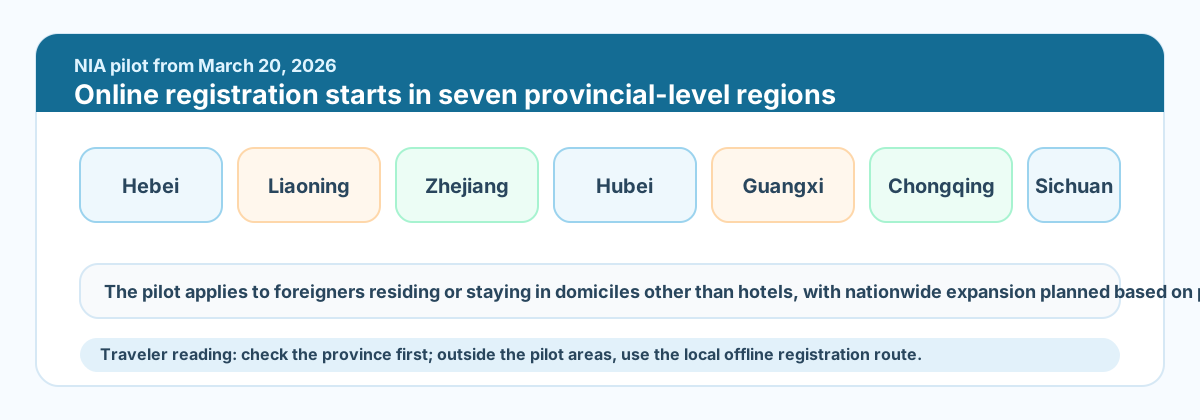
China is piloting online accommodation registration for foreigners staying outside hotels in Hebei, Liaoning, Zhejiang, Hubei, Guangxi, Chongqing, and Sichuan.
Quick Answer
China is piloting online accommodation registration for foreigners who stay in non-hotel residences in seven provincial-level regions: Hebei, Liaoning, Zhejiang, Hubei, Guangxi, Chongqing, and Sichuan. The pilot began on March 20, 2026. It does not remove the accommodation registration requirement: foreigners staying somewhere other than a hotel, or the people hosting them, still need to complete registration within 24 hours after the foreigner arrives at the place of stay. The practical change is that pilot-region users can use the NIA website, NIA 12367 App, NIA 12367 WeChat mini program, or Alipay mini program instead of visiting a local public security office in person.
Best Option by Scenario
| Scenario | Best option | Notes |
|---|---|---|
| Tourist staying with a friend or relative in a pilot region | Ask the host to help complete the first online registration within 24 hours of arrival at the residence. | The host usually knows the residence details needed for the record. |
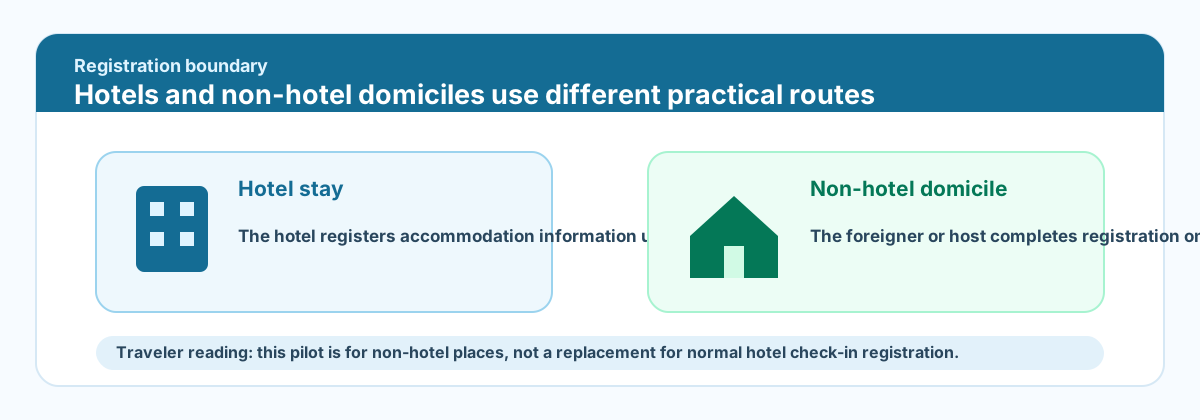
| Foreigner staying at a hotel | Use normal hotel check-in; the hotel submits the accommodation information under hotel rules. | The pilot is aimed at domiciles other than hotels. |
| Foreigner outside the seven pilot regions | Use the local offline public security registration channel unless the online service has expanded locally. | The NIA says nationwide expansion will depend on pilot progress. |
Detailed Guide
What changed
China’s National Immigration Administration began a pilot online accommodation registration service on March 20, 2026 for foreigners residing or staying in domiciles other than hotels. The first pilot regions are Hebei, Liaoning, Zhejiang, Hubei, Guangxi, Chongqing, and Sichuan, with a nationwide rollout planned based on pilot progress.
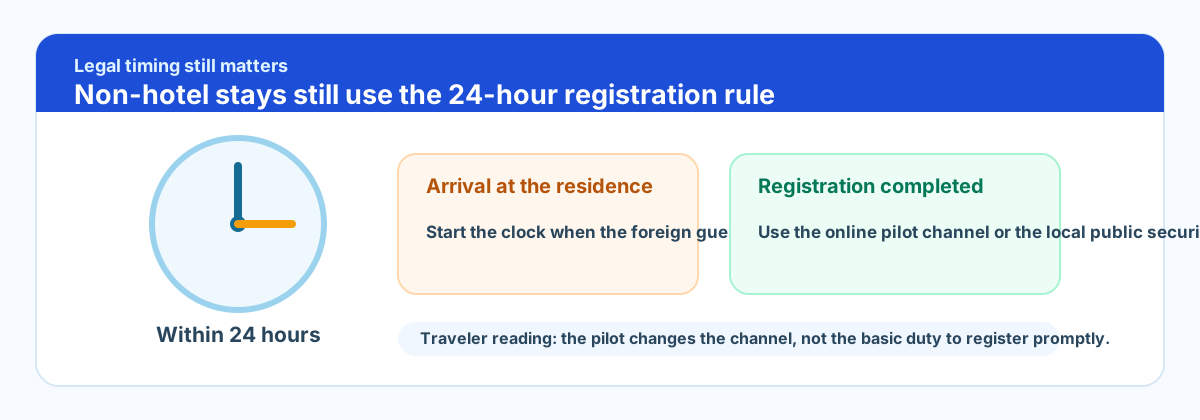
The pilot does not remove the underlying registration duty. For a non-hotel stay, the foreigner or the person who accommodates them still needs to complete registration within 24 hours after the foreigner arrives at the place of residence.
Who this affects
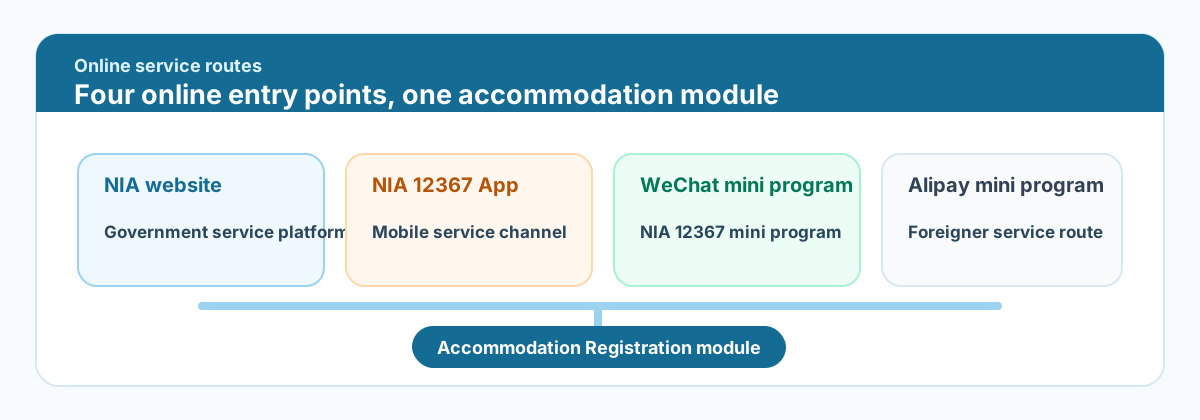
The new route matters most for travelers and longer-stay visitors sleeping somewhere other than a hotel, such as a friend’s home, a relative’s home, a self-owned residence, or another private domicile. In pilot regions, users can go through the NIA official website, the NIA 12367 App, the NIA 12367 WeChat mini program, or the Alipay mini program.
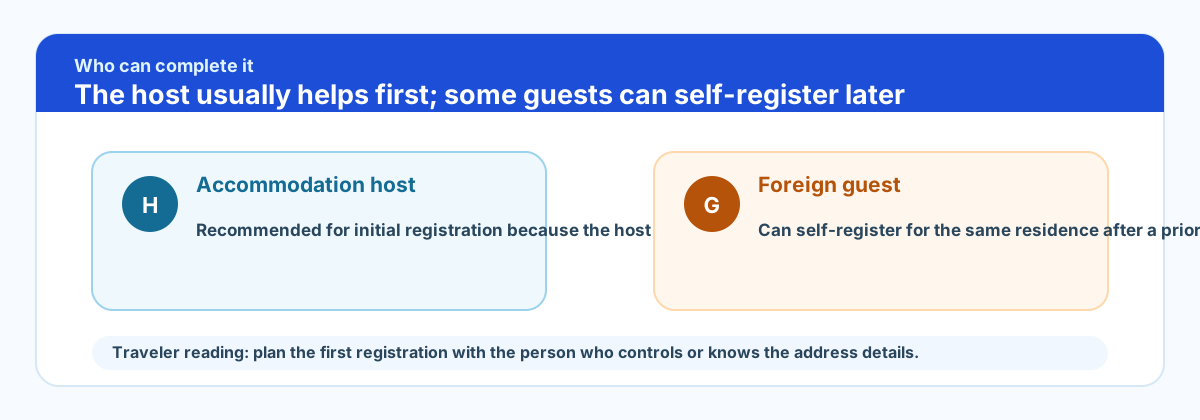
The NIA interpretation says accommodation registration may be completed by the foreigner or by the person accommodating them, but the first registration should generally be completed with host assistance because the host is more familiar with the residence information.
What travelers should do now
If you are staying in a hotel, this pilot should not change your normal check-in workflow because hotels still register foreign guests under hotel accommodation rules. If you are staying outside a hotel in a pilot region, plan the registration step with your host before or immediately after arrival at the residence.
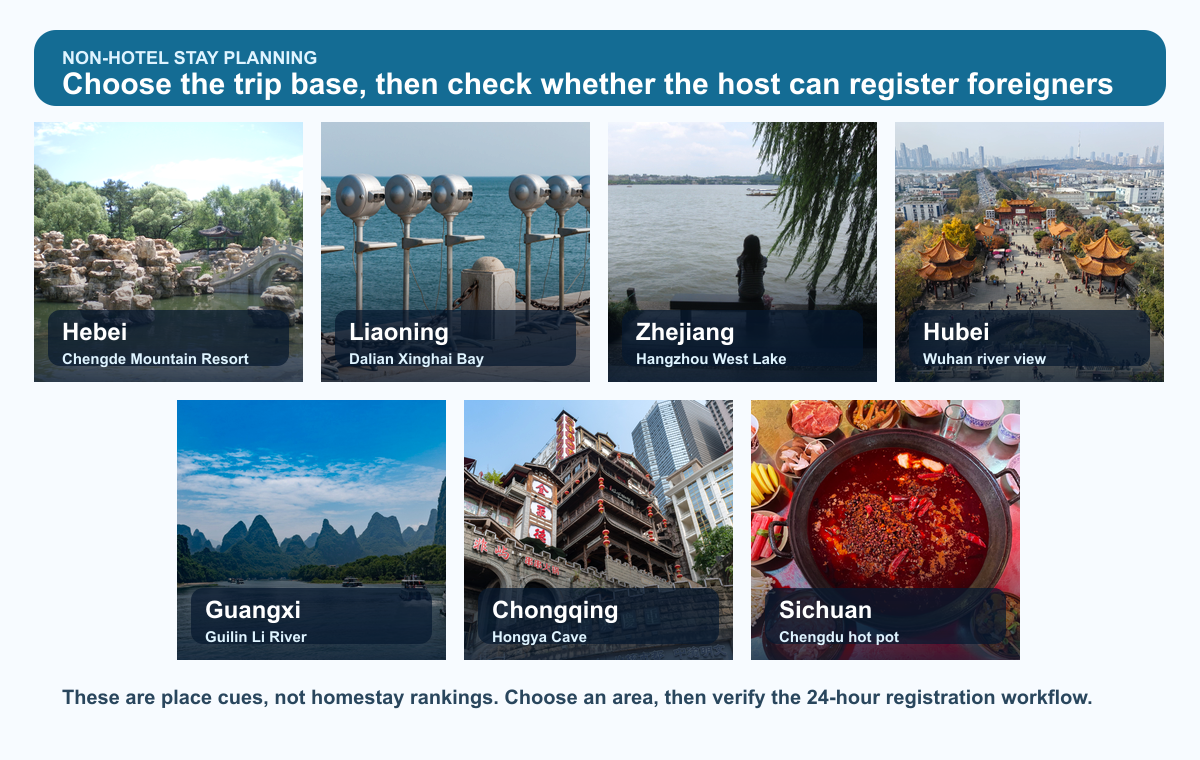
For non-hotel stays, choose the city or neighborhood first, then verify whether the host can handle foreigner accommodation registration. Useful travel bases in the pilot regions include Shijiazhuang or Chengde in Hebei, Shenyang or Dalian in Liaoning, Hangzhou, Ningbo, or Yiwu in Zhejiang, Wuhan or Yichang in Hubei, Guilin, Yangshuo, or Nanning in Guangxi, central Chongqing districts such as Yuzhong or Jiangbei, and Chengdu or Leshan in Sichuan. The scenery and food may sell the trip, but host registration readiness should still decide the actual non-hotel booking.
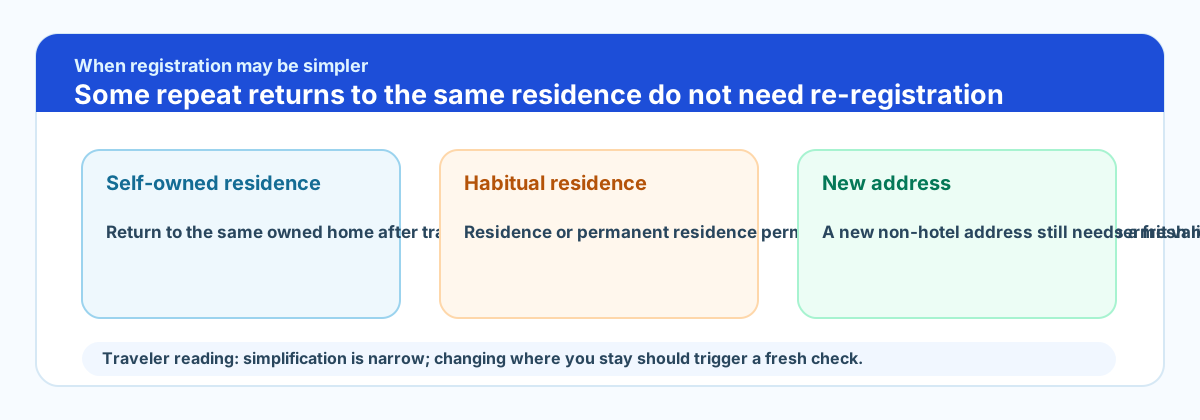
If you own the residence, return to a previously registered same residence, or hold a residence permit or permanent residence permit and return to a habitual residence during the same permit validity period, read the NIA interpretation carefully before filing again. The interpretation describes limited cases where repeat registration is not required, but a new address should still be treated as a fresh registration situation.
What is still unclear
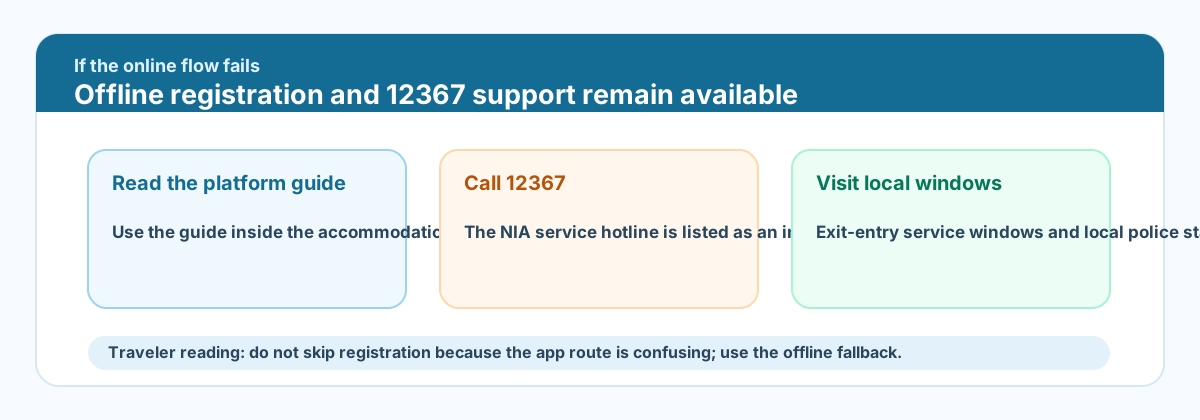
The official national guidance confirms the pilot regions and channels, but the traveler-facing experience may still vary by city, address type, identity-verification step, app language setting, and local public security practice. If the online flow fails, use the in-platform guide, call 12367, or complete registration through local public security service windows or police stations.
Source notes
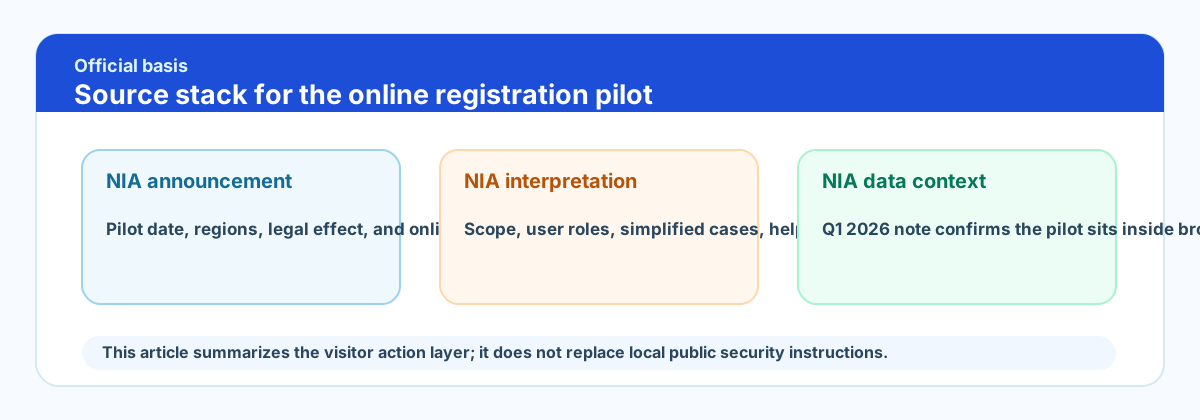
This explainer is based on the NIA March 20, 2026 announcement, the NIA policy interpretation published the same day, the NIA service landing page, and the NIA’s April 2026 first-quarter service update. It summarizes the practical visitor workflow and should be checked against local instructions for the exact address where the foreigner will stay. The pilot-region photo strip uses cropped local copies from Wikimedia Commons; individual file credits and license notes are listed in Sources and Update Notes.
Step-by-Step Checklist
- 1Confirm whether the stay is in Hebei, Liaoning, Zhejiang, Hubei, Guangxi, Chongqing, or Sichuan.These are the pilot regions named by the NIA from March 20, 2026.
- 2Decide who will file: host or foreign guest.Initial registration should generally be completed with host assistance.
- 3Use an official NIA channel or the Alipay mini program.Avoid unofficial sites that claim to handle immigration registration.
- 4Keep the registration record available.The NIA interpretation says users can view the record after completion.
Common Mistakes
- Assuming online registration means registration is optional. The pilot changes the filing channel; the 24-hour registration obligation still applies to non-hotel stays.
- Using the pilot rule for hotel stays. Hotels continue to register foreign guests through the hotel accommodation process.
- Waiting because the app or mini program is confusing. Use the NIA guide, call 12367, or visit local public security service windows or police stations.
FAQ
Which regions are in the online accommodation registration pilot?
The NIA named Hebei, Liaoning, Zhejiang, Hubei, Guangxi, Chongqing, and Sichuan as the seven pilot provincial-level regions from March 20, 2026.
Does online registration have the same effect as on-site registration?
Yes. The NIA announcement says online registration has the same legal effect as registration completed on site.
Can the foreign guest register without the host?
Sometimes. The NIA interpretation says the initial registration should generally be completed with host assistance, but foreigners may self-register for the same residence after a prior online record or for a self-owned residence.
Sources and Update Notes
- NIA announcement on pilot online accommodation registration for foreigners Checked June 2, 2026 for the pilot date, seven regions, 24-hour rule, online channels, offline fallback, and legal-effect statement.
- NIA policy interpretation of online accommodation registration service Checked June 2, 2026 for scope, user roles, simplified repeat-stay cases, help routes, and legal-liability note.
- NIA online accommodation registration service page Checked June 2, 2026 as the official service landing page linking the policy announcement, interpretation, and application channels.
- China's cross-border trips hit 185 million in Q1 2026 Checked June 2, 2026 for NIA context that the pilot is part of broader entry-service facilitation.
- Wikimedia Commons image credits: Chengde Mountain Resort Photo by tak.wing, CC BY-SA 2.0; cropped into the pilot-region photo strip.
- Wikimedia Commons image credits: Dalian Xinghai Bay Photo by CEphoto, Uwe Aranas; cropped into the pilot-region photo strip.
- Wikimedia Commons image credits: West Lake, Hangzhou Photo by Evan Hemingway, CC BY-SA; cropped into the pilot-region photo strip.
- Wikimedia Commons image credits: Wuhan river view Photo by Yumeto, CC BY-SA 4.0; cropped into the pilot-region photo strip.
- Wikimedia Commons image credits: Guilin Li River Photo by xiquinhosilva, CC BY 2.0; cropped into the pilot-region photo strip.
- Wikimedia Commons image credits: Hongya Cave, Chongqing Photo by xiquinhosilva, CC BY 2.0; cropped into the pilot-region photo strip.
- Wikimedia Commons image credits: Chengdu hot pot Photo by 유신예, CC BY-SA 4.0; cropped into the pilot-region photo strip.


.jpg)
