Destinations
Best China Summer Destinations for July and August
Choose cooler China summer routes for July and August: Yunnan highlands, Guizhou, Qinghai and Gansu, Hulunbuir grasslands, and the Shandong coast, with heat, rain, altitude, rail, and payment notes.
Quick Answer
The best China summer destinations for July and August are usually not the hottest first-trip megacity loops. Pick Yunnan highlands if you want the easiest cool-weather route with rail and tourism infrastructure. Pick Guizhou if you want green mountains, waterfalls, and a cooler city base around Guiyang. Pick Qinghai or the Gansu corridor if you want plateau lakes and open landscapes but can handle altitude and access checks. Pick Hulunbuir if you want grasslands and wide horizons, ideally with a driver or planned tour. Pick the Shandong coast if you want seafood, rail, and sea breezes without going far west. Wherever you go, plan mornings and evenings outside, keep one weather buffer, and prepare maps, payment, train booking, and backup connectivity before arrival.
Best Option by Scenario
| Scenario | Best option | Notes |
|---|---|---|
| First China trip with limited heat tolerance | Choose Yunnan highlands: Kunming, Dali, Lijiang, and possibly Shangri-La if you can manage altitude. | This has the best balance of comfort, transport, hotels, food, and foreign-visitor logistics. |
| Green mountains, waterfalls, and lower international crowd pressure | Use Guiyang as the base and build a Guizhou route around Huangguoshu, karst scenery, and village or city breaks. | Summer rain is part of the trade-off; do not plan every outdoor block for the afternoon. |
| Big landscape and road-trip energy | Use Qinghai Lake, Xining, Zhangye, or Gannan only if you accept plateau weather, long transfers, and access verification. | Some Qinghai or Tibetan-area routes can be sensitive for foreign visitors; verify hotel and scenic-area access before paying. |
| Grassland escape | Use Hulunbuir for July and August grassland scenery, but plan transport carefully from Hailar and keep warm layers for nights. | A short 2-3 day grassland trip can work, but independent low-cost transport is not always simple. |
| Coast without a far-west trip | Use Qingdao, Weihai, and Yantai as a rail-first Shandong coast route. | It is still summer, with humidity, fog, rain, and beach crowds; treat the coast as cooler-feeling, not magically cool. |
Detailed Guide
July and August in China reward route choice more than raw sightseeing ambition. A cooler-feeling summer trip usually comes from one of five strategies: go higher, go greener, go farther north, go to the coast, or slow a famous city itinerary enough that heat does not own the day.
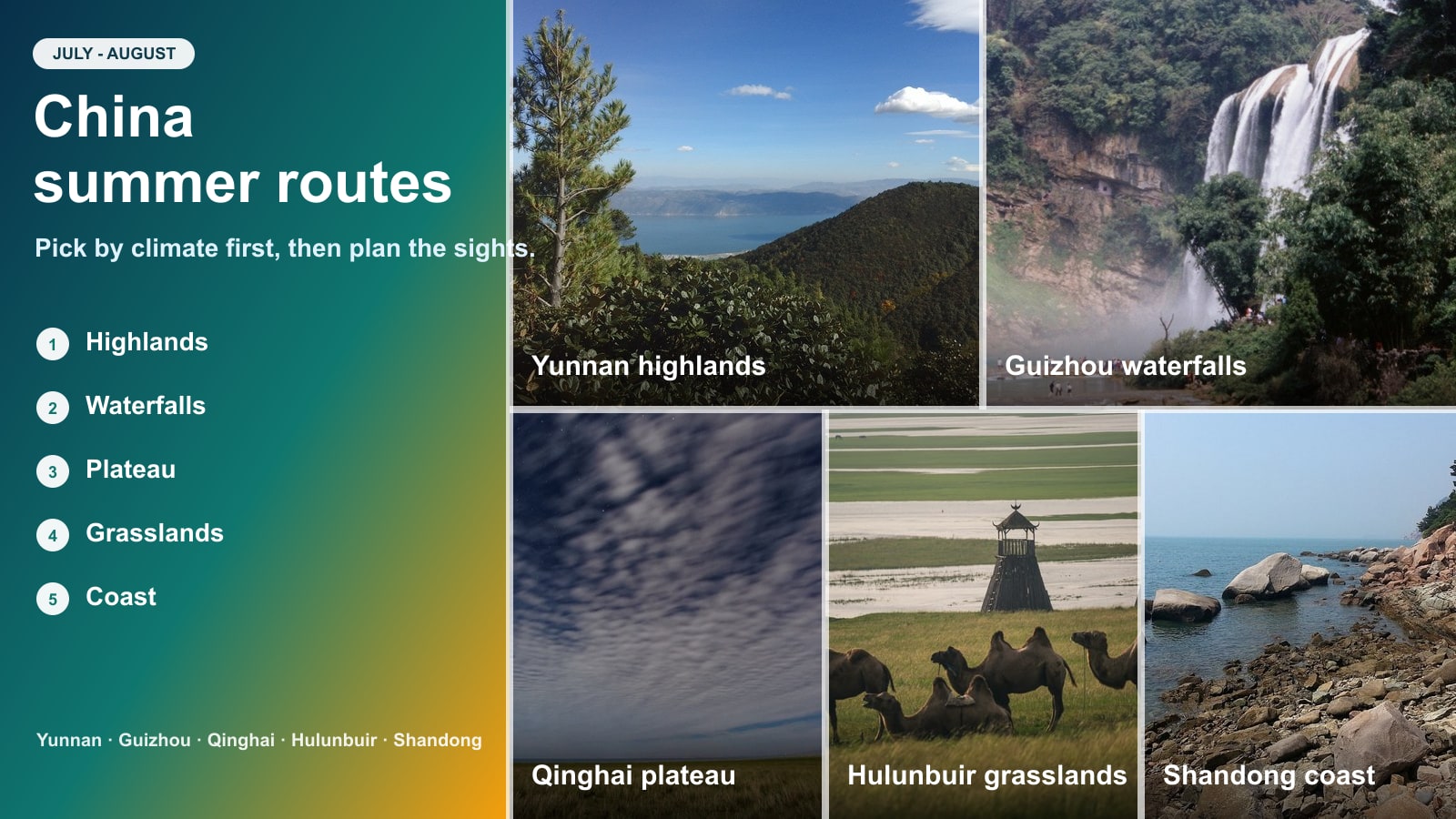
The safest default is Yunnan highlands. Kunming works as the soft landing, Dali and Lijiang give you lake, old-town, and mountain bases, and Shangri-La adds a cooler plateau feel if you can handle about 3,300 meters of altitude. Visit Yunnan describes Shangri-La as sitting on the eastern edge of the Qinghai-Tibet Plateau and warns that July-August is rainy, with lush grasslands but changeable weather.
Use Yunnan when you want the summer trip to feel beautiful without becoming a logistics project. Keep the route compact, pack rain gear, avoid rushing altitude, and do not treat Xishuangbanna as the same summer climate as Dali or Shangri-La. The edit is simple: one highland spine, fewer transfers, more room for weather.
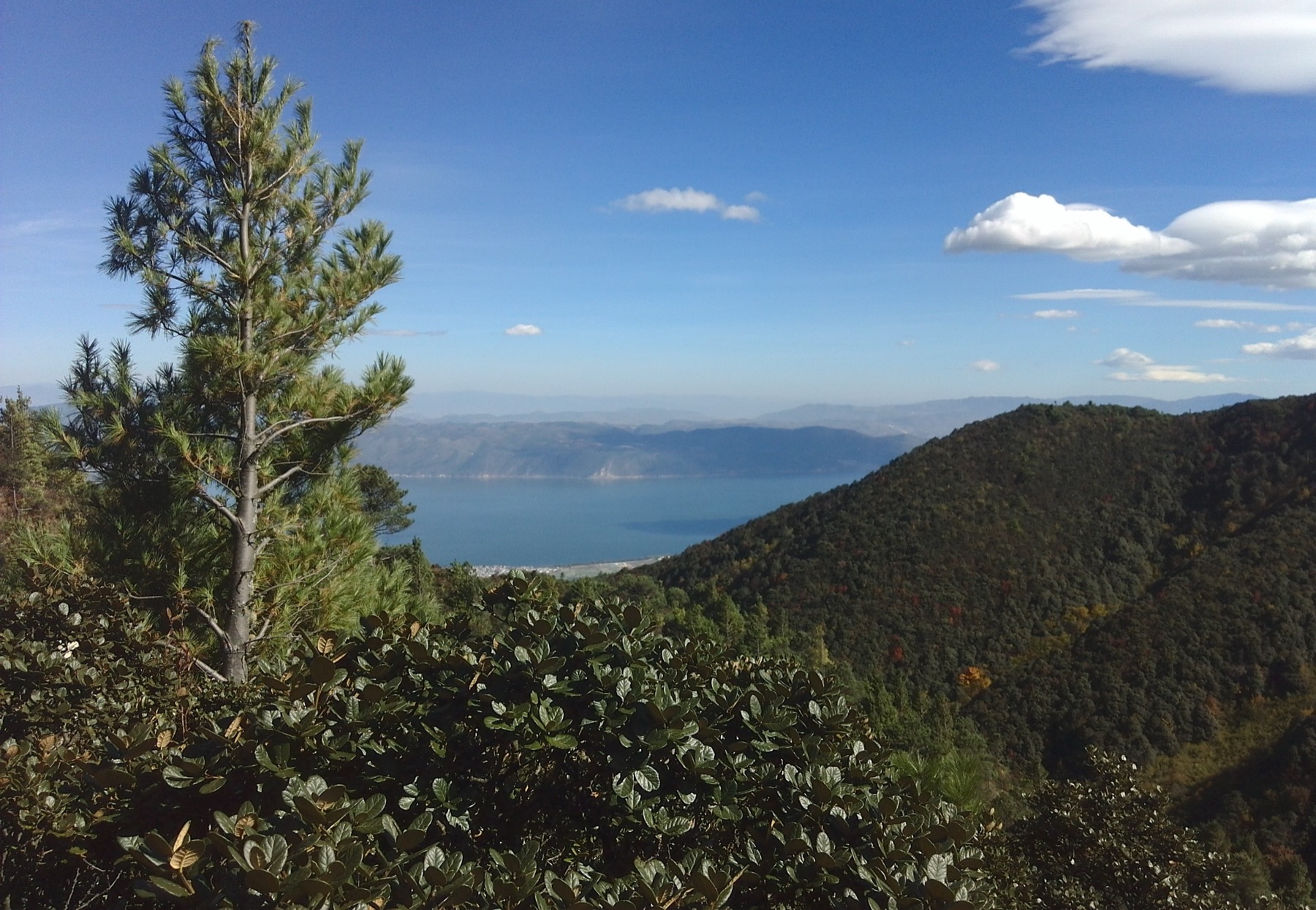
Guizhou is the underused summer alternative when you want green mountains and waterfalls instead of a famous Yunnan loop. Guiyang’s English municipal pages explicitly position the city around summer-resort travel and cool-weather tourism. Use Guiyang as the base, then decide whether your route is waterfall-heavy, village-heavy, or city-and-food-heavy.
The trade-off is rain. Waterfalls and karst landscapes are visually strong in summer, but afternoon storms can break a tight plan. Build the day like a local summer rhythm: outdoor sights early, food or city breaks at midday, and transport plans that still work if the sky turns.
The route feels strongest when you resist the urge to stack every famous waterfall, village, and viewpoint into one loop. Choose Guiyang for recovery and food, then give each outdoor day one main scenic target plus a rain-safe backup. That keeps the green, humid summer mood attractive instead of turning it into a transfer race.

Qinghai, Gansu, and similar northwest or plateau routes are for travelers who want big open landscapes and accept more logistics. Qinghai Lake is high-altitude country; the UNESCO tentative-list page places the lake area around the Qinghai-Tibet Plateau context and surrounding mountains. That is exactly why it feels like a summer escape, and also why it needs caution.
Do not buy the romance before you verify the route. Foreign visitors should check hotel acceptance, scenic-area access, route restrictions, altitude response, driver or tour needs, and train or flight timing before building an independent road-style plan. This is the big-sky choice, not the low-friction choice.
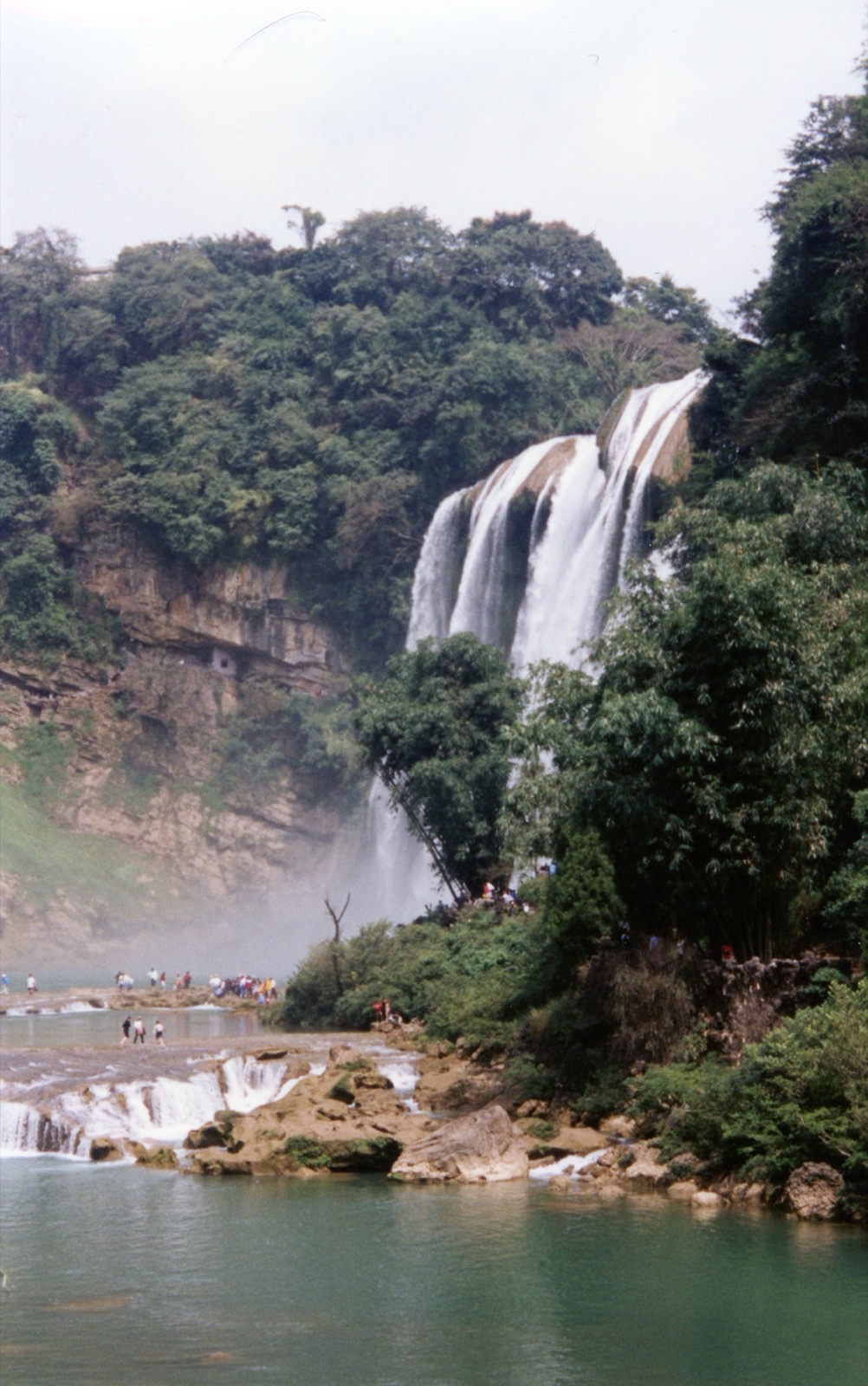
Hulunbuir is best when your summer fantasy is grassland rather than mountains or coast. China Daily’s government-hosted page describes the Hulunbuir Grasslands as among China’s best-preserved grasslands and gives a summer tourist season from mid-May to mid-September. The visual promise is straightforward: wide horizons, green pasture, lakes, and cooler evenings.
The practical question is how you move once you arrive. Hailar can be the access point, but a 2-3 day trip still needs a driver, tour, or carefully checked local transport. Bring warm layers for nights, keep one weather buffer, and do not assume grassland stays mean hotel-style predictability.
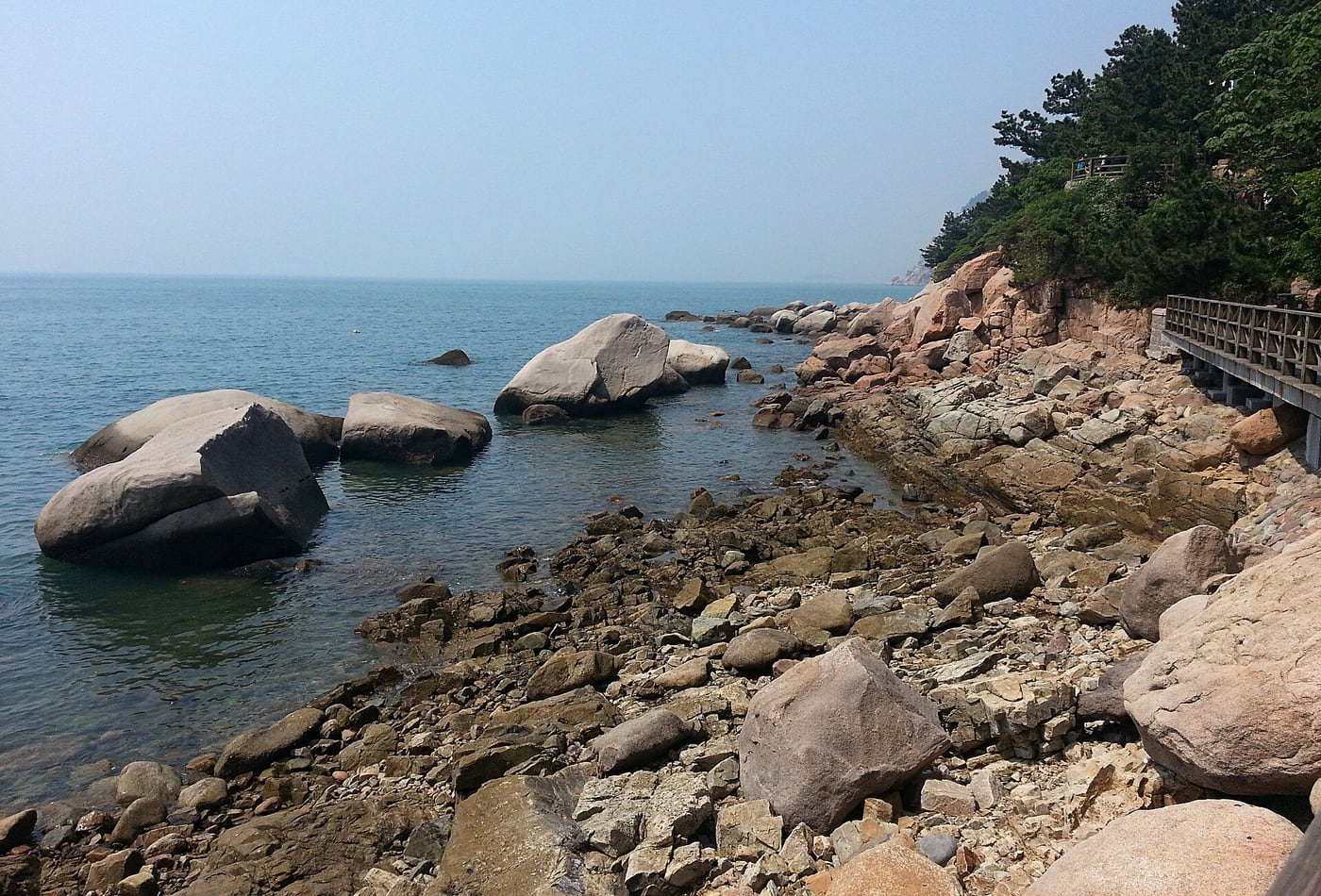
The Shandong coast is the practical compromise when you want summer relief without flying far west or organizing a plateau road trip. Qingdao, Weihai, and Yantai are easier to combine by rail than many remote summer escapes, and they give you sea walks, seafood, old-town or coastal city texture, and a clear first-China route.
But the word coast can mislead. July and August still bring humidity, rain, sea fog, strong sun, and domestic beach crowds. Plan morning and evening walks, keep lunch and early afternoon flexible, and use the Shandong coast itinerary when you want city logistics plus sea air rather than pure wilderness.
How To Choose
Choose by constraint first, not by the prettiest name on a list. If heat tolerance is the constraint, start with Yunnan or Guiyang. If scenery scale is the constraint, compare Qinghai/Gansu with Hulunbuir and accept that both need more transport planning. If you want the lowest-friction summer feeling from eastern China, choose the Shandong coast.
The useful question is not “which destination is best?” but “which climate strategy still works after rain, altitude, train tickets, hotel acceptance, and one tired afternoon are included?” The right choice is the one that matches your logistics tolerance, not the one with the longest destination list.
What To Avoid
Avoid building a July-August China trip as if weather were a footnote. Beijing, Shanghai, Xi’an, Chengdu, Chongqing, Guangzhou, and Hong Kong can still be worth visiting, but a summer version needs fewer daily moves, better-located hotels, indoor midday blocks, and honest rest. Reddit summer-planning threads repeatedly circle the same problems: heat, crowds, families limited to school-holiday windows, and too much travel time lost to checkout, stations, security, boarding, and transfers. Use that as a design warning.
Heat management is not only temperature. Rain, crowds, queues, and transfer fatigue can matter just as much. A summer route should feel edited: fewer regions, stronger anchors, better time-of-day choices, and enough empty space that one storm does not ruin the trip.
Image Credits
Article images are saved locally from Wikimedia Commons or existing Siye China licensed assets: Dali-Cangshan Erhai Lake by Toni Woehrl (CC BY-SA 4.0); Huangguoshu Waterfall by Dounai (CC BY-SA 3.0); Qinghai Lake by Sergio Tittarini (CC BY 2.0); Hulunbuir Grasslands by Sergio Tittarini (CC BY 2.0); Laoshan rocky beach near Taiqing Gong by Rolfmueller (CC BY-SA 3.0). Some images were resized for article delivery.
Step-by-Step Checklist
- 1Pick the climate strategy firstChoose highland, grassland, coast, waterfall/karst, or plateau road-trip before listing famous sights.
- 2Avoid all-day outdoor plansMove city walks, viewpoints, and hikes to morning or evening. Use midday for trains, museums, cafes, hotel rest, or shaded food blocks.
- 3Check rain and typhoon exposureSouth and east China can see heavy rain or typhoon effects in summer. Build a weather swap for every outdoor-heavy day.
- 4Respect altitudeShangri-La, Qinghai Lake, Gannan, and western Sichuan-type routes need slower pacing, warm layers, hydration, and altitude caution.
- 5Prepare the China travel stackSet up Alipay or WeChat Pay, AMap, DiDi, train booking, translation, hotel addresses in Chinese, and backup connectivity before you move between regions.
Common Mistakes
- Assuming coastal or highland means no summer risk. Expect rain, sun exposure, humidity, altitude, mosquitoes, or cold nights depending on the region.
- Copying a Chinese domestic summer list without filtering for foreigner logistics. Keep the destination ideas, then check trains, flights, hotel acceptance, payment, English-friendly booking, and restricted or sensitive areas.
- Trying to combine Yunnan, Qinghai, Inner Mongolia, and the coast in one short trip. Choose one climate strategy for a 7-10 day trip. Add a second region only if you have two weeks or more.
- Planning only famous megacities in late July or August. If Beijing, Shanghai, Xi'an, Chengdu, Chongqing, Guangzhou, or Hong Kong are essential, slow the pace and add indoor midday recovery.
FAQ
Where should I go in China in July or August to avoid the worst heat?
For most first-time foreign visitors, start with Yunnan highlands or Guizhou. If you can handle longer transfers, consider Qinghai/Gansu or Hulunbuir. If you prefer easier rail and coast, use Qingdao, Weihai, and Yantai.
Is Yunnan the best China summer destination?
Yunnan is often the easiest summer answer because Kunming, Dali, Lijiang, and Shangri-La combine altitude, scenery, tourism infrastructure, and rail or flight access. Avoid assuming all of Yunnan is cool: Xishuangbanna is a different, hotter tropical region.
Is Qinghai good for foreign tourists in summer?
Qinghai can be beautiful and cooler, especially around Xining and Qinghai Lake, but foreign travelers should verify hotel acceptance, scenic-area access, route restrictions, altitude, and transport before treating it as an easy independent route.
Is the Shandong coast actually cool in July and August?
It can feel more comfortable than inland furnace cities, especially near the sea, but it is still summer. Expect humidity, sea fog, rain, beach crowds, and strong sun, then plan mornings, evenings, and weather buffers.
Should I still visit Beijing, Shanghai, or Xi'an in summer?
Yes if those cities are your main reason for the trip, but do not plan long midday walks. Use early mornings, evenings, indoor attractions, closer hotels, and fewer daily transfers.
Sources and Update Notes
- User-provided Xiaohongshu summer escape inspiration Steven provided this on June 4, 2026 as Chinese demand and topic inspiration. The shared title framed July-August summer escapes across many interests and destinations. It is used as demand signal, not as a factual source for weather, access, or prices.
- Shangri-La | Visit Yunnan Checked on June 4, 2026 for Shangri-La altitude, July-August rainy-season notes, grassland seasonality, transport, and altitude cautions.
- Kunming: city of eternal spring | Kunming municipal English site Checked on June 4, 2026 for Kunming's elevation, year-round climate framing, and role as Yunnan transport hub.
- Guiyang sees thriving summer resort market | Guiyang municipal English site Checked on June 4, 2026 for Guiyang's summer-resort positioning and peak summer travel context.
- Guiyang rated excellent as summer resort | Guiyang culture and tourism Checked on June 4, 2026 for meteorological-tourism framing around Guiyang's cool weather and humidity.
- Qinghai Lake | UNESCO World Heritage Centre tentative list Checked on June 4, 2026 for Qinghai Lake elevation, surrounding mountain context, summer ecological notes, and conservation framing.
- Hulunbuir Grasslands | govt.chinadaily.com.cn Checked on June 4, 2026 for the Hulunbuir grasslands description, lakes context, and summer tourist season.
- Reddit July and August China travel discussions Checked on June 4, 2026 as qualitative demand signal only. Repeated traveler concerns shaped the heat, crowd, family, and transfer-fatigue cautions.