Entry Policy
Beijing Travel Is Busy Again in 2026
Beijing's 2026 inbound travel rebound is now a practical visitor story: busier ports, more visa-free arrivals, and more services to set up before the first day.
Quick Answer
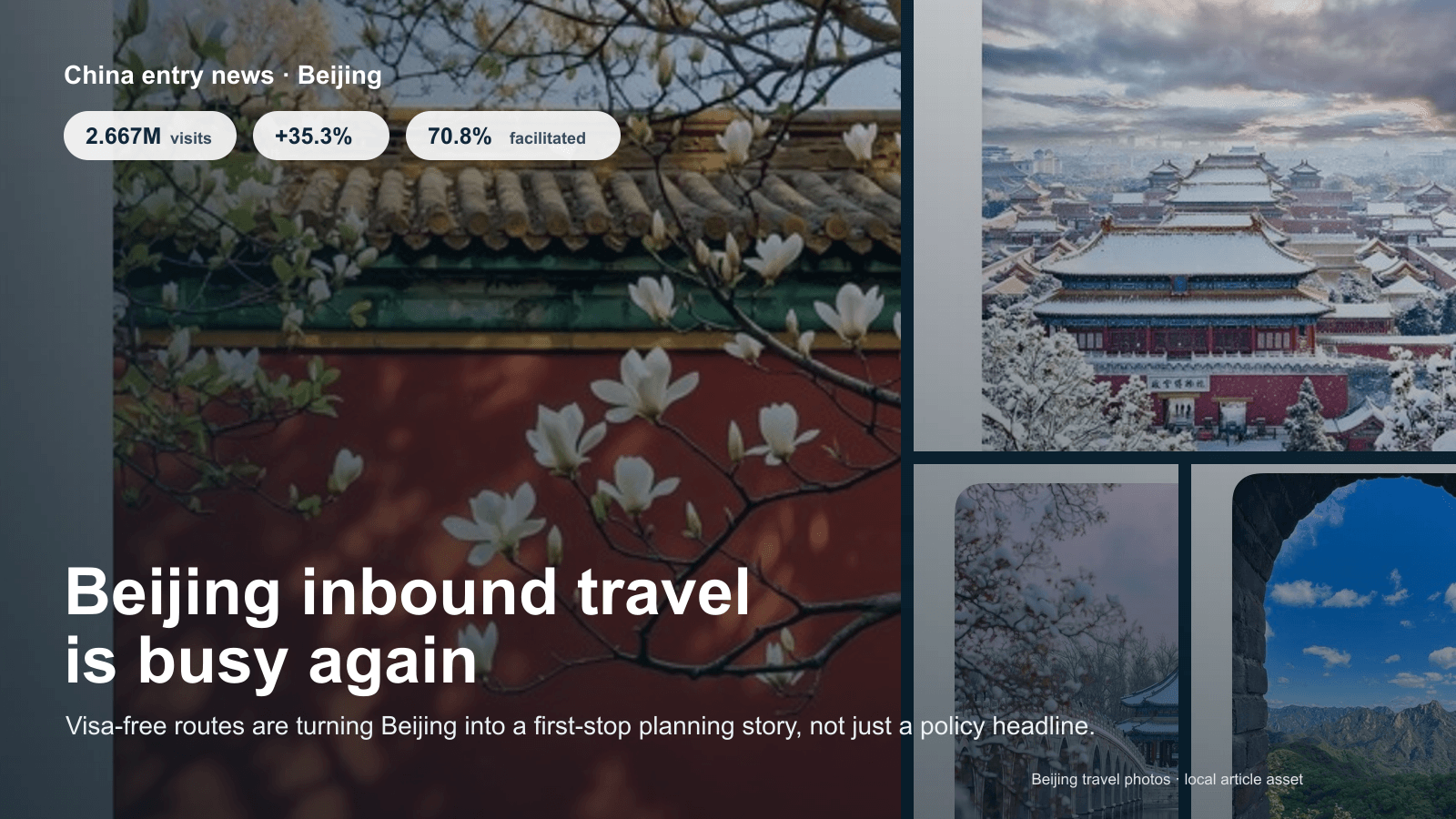
Beijing's latest inbound tourism news is a travel-planning signal, not a new visa rule. Xinhua reported on June 3, 2026 that Beijing received 2.667 million inbound tourists in the first five months of 2026, up 35.3 percent year on year. At Beijing ports, about 957,000 foreign arrivals had used visa-free or temporary entry permit policies by May 11, accounting for 70.8 percent of foreign entrants. For visitors, the useful takeaway is to treat Beijing as a busier but smoother China entry point: verify your exact visa-free or transit eligibility, keep onward tickets and stay details ready, and set up payment, tickets, and tax-refund options before peak travel days.
Best Option by Scenario
| Scenario | Best option | Notes |
|---|---|---|
| Tourist eligible for China's 30-day unilateral visa-free entry | Use Beijing as a simple first stop, but carry proof that your visit purpose matches the policy. | Tourism, business, family or friend visits, exchange visits, and transit are the common permitted purposes named in official guidance. |
| Traveler using 240-hour visa-free transit through Beijing | Confirm the third-country or region route, eligible port, passport nationality, and onward ticket before check-in. | A Beijing stopover is not the same as ordinary visa-free entry. |
| Traveler planning shopping, museums, or popular attractions | Set up payment, tickets, and tax-refund store checks before arrival or on the first day. | Beijing is promoting one-stop visitor services, but individual merchants and venues can still vary. |
Detailed Guide
What changed
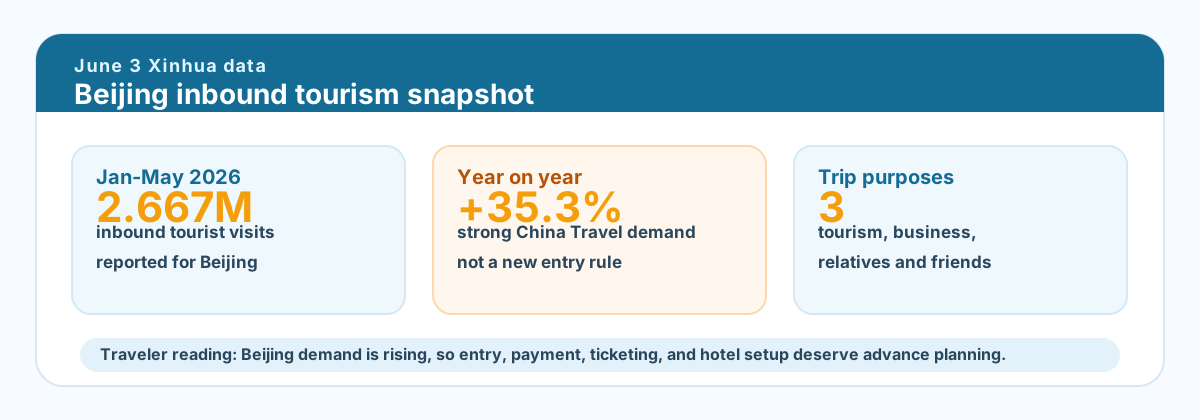
For travelers, the Beijing story is no longer only “can I enter China more easily?” It is also “what will the first day feel like when more people are using the same airports, attractions, payments, and visitor services?” Xinhua reported on June 3, 2026 that Beijing received 2.667 million inbound tourists in the first five months of 2026, a 35.3 percent increase from the same period last year. Read that as a current demand and service signal for “China Travel,” not as a new national visa announcement.
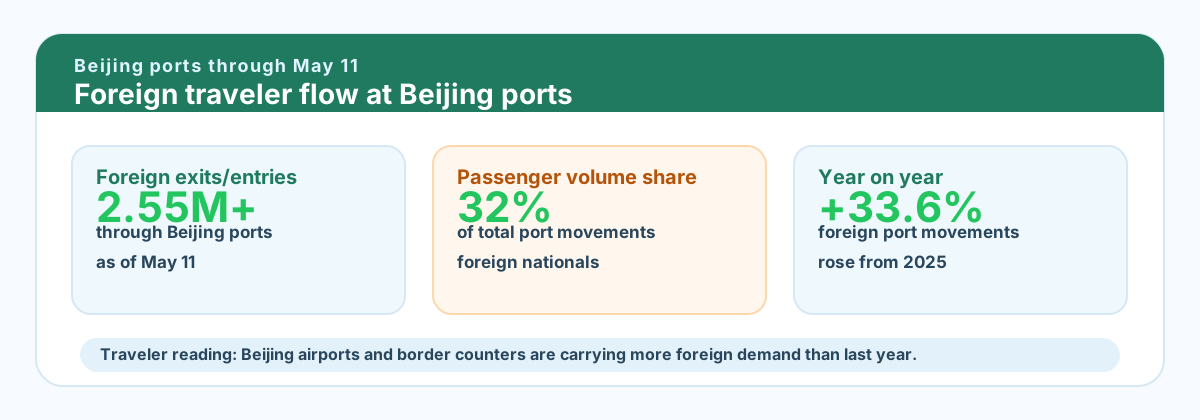
The port data in the same Xinhua item shows why Beijing matters as an entry point: by May 11, exits and entries by foreign nationals at Beijing ports had exceeded 2.55 million, accounting for 32 percent of total passenger movements through those ports and rising 33.6 percent year on year.
Who this affects
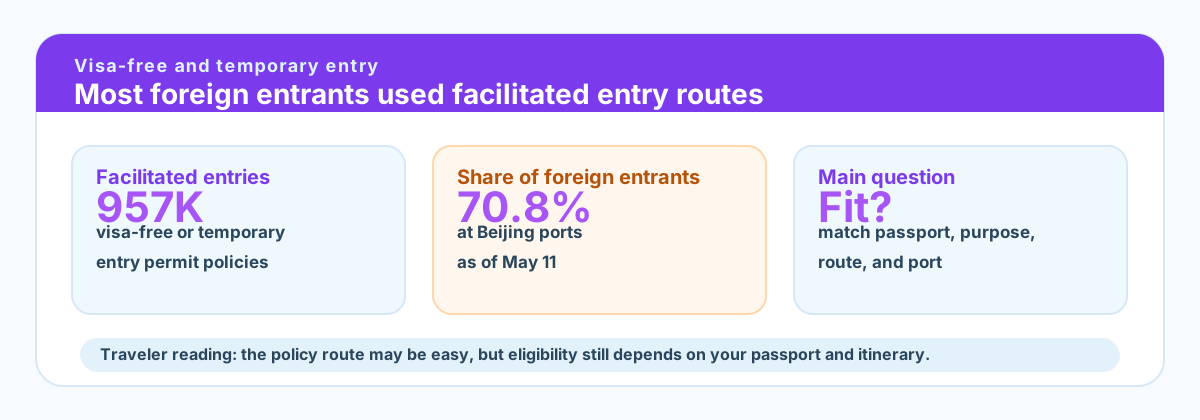
The clearest audience is travelers who can use either ordinary visa-free entry or a temporary entry permit route. Xinhua said about 957,000 foreign arrivals at Beijing ports had entered under visa-free or temporary entry permit policies by May 11, accounting for 70.8 percent of all foreign entrants at those ports.
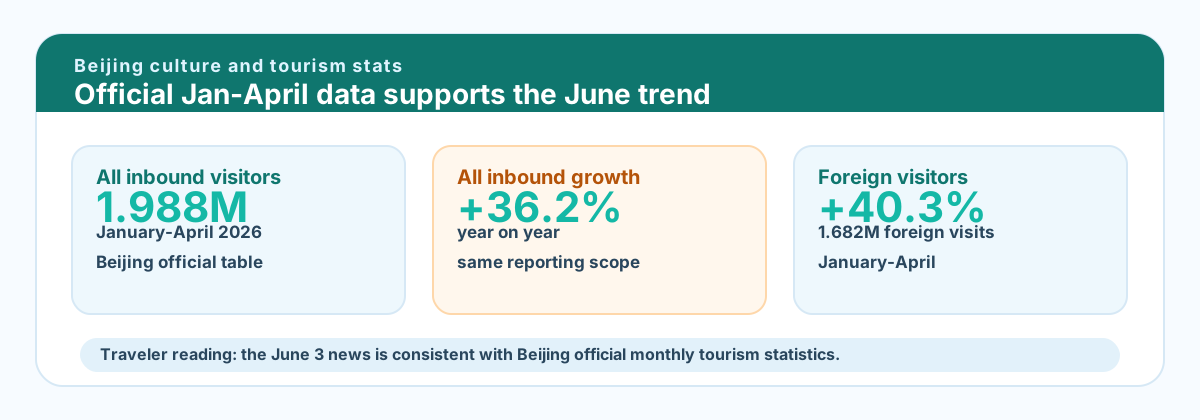
Beijing’s own culture and tourism statistics support the trend before the May figures: the municipal tourism table published on May 25 showed 1,988,158 inbound visitors from January to April 2026, up 36.2 percent year on year, including 1,682,276 foreign visitors, up 40.3 percent.
What travelers should do now
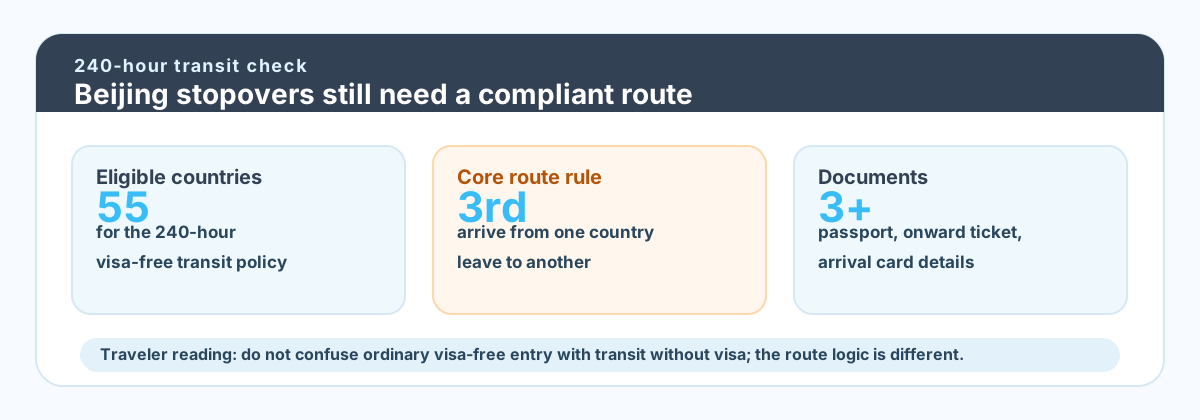
If you are planning a Beijing stopover, first decide whether your trip is ordinary visa-free entry, 240-hour visa-free transit, or a visa-required trip. The Beijing 240-hour transit page says eligible travelers from 55 countries need a valid passport, an onward ticket with a confirmed seat to a third country or region, and the temporary-entry process at the port; public traveler discussions show that route wording and “third country” logic remain common points of confusion.
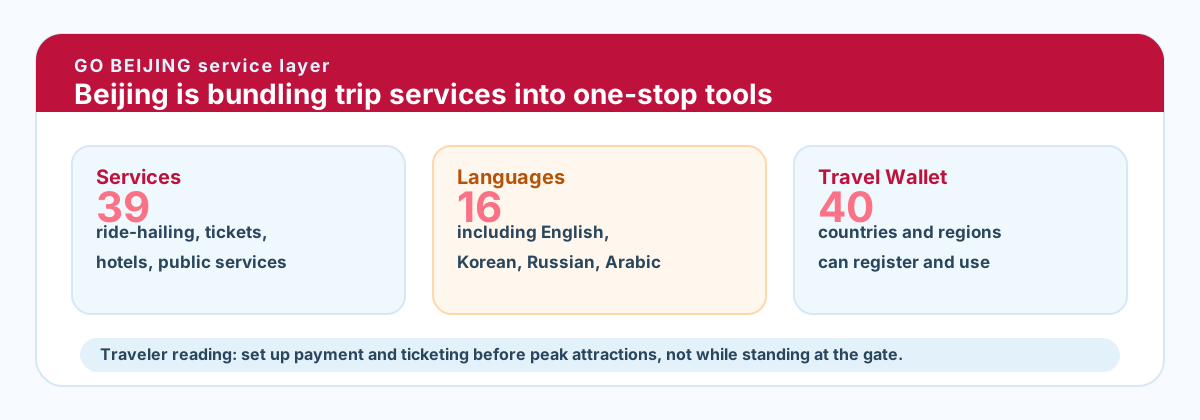
Once your entry route is clear, treat Beijing’s service upgrades as helpful tools rather than magic. The GO BEIJING platform launched with services covering dining, accommodation, transportation, sightseeing, shopping, entertainment, public services, ticket booking, international card payments, departure tax refunds, and multilingual navigation; Beijing’s June 1 inbound tourism conference notice also highlighted “GO BEIJING,” hotel quick tax-refund services, and market-oriented visitor consumption lists.
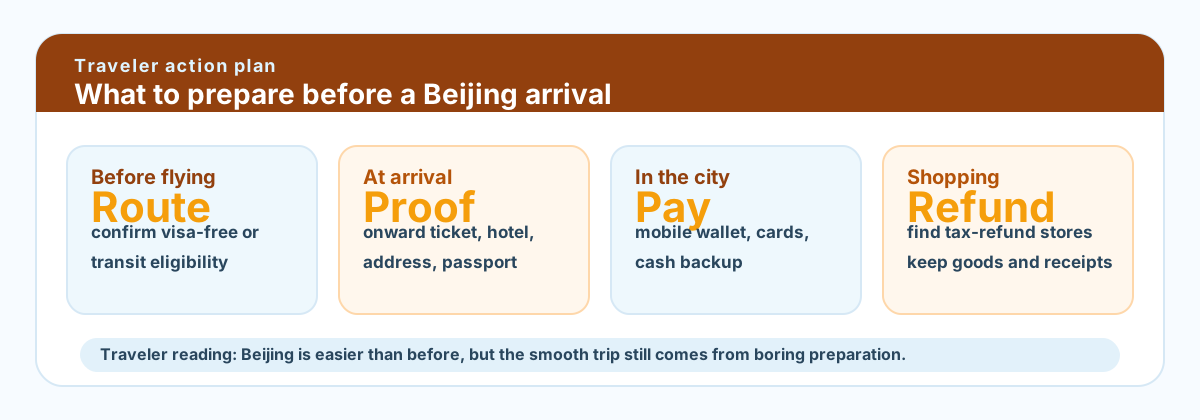
For a first Beijing trip in 2026, the safest preparation is still simple: keep passport and entry-route proof handy, save hotel or stay details, set up a main payment method plus a backup, book time-sensitive attractions early, and keep receipts and goods accessible if you plan to use tax-refund services.
What is still unclear
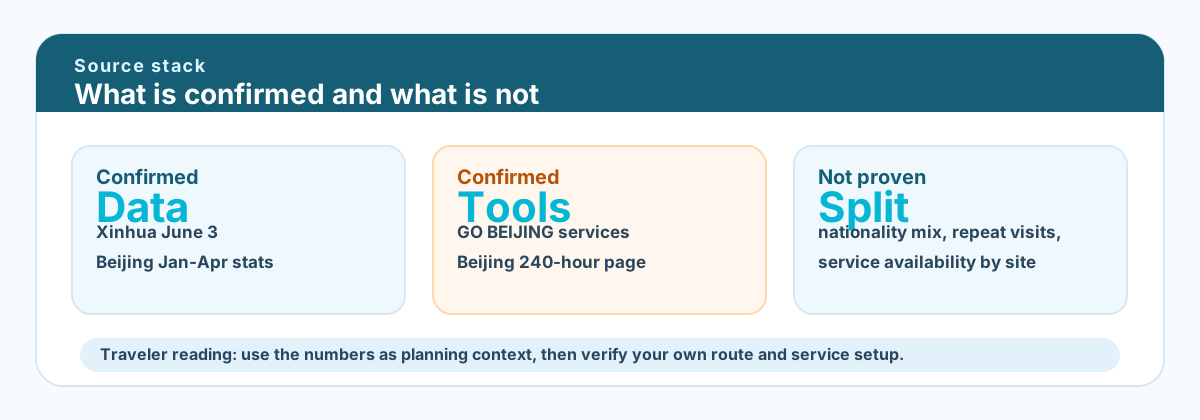
The June 3 report does not break down the 957,000 facilitated arrivals by nationality, separate ordinary visa-free entry from temporary entry permits, or explain how many were repeat travelers. Local service quality can also vary by airport terminal, merchant, hotel, attraction, app language setting, and individual staff familiarity, so travelers should verify the specific route, venue, and payment or refund channel they plan to use.
Source notes
This article uses Xinhua’s June 3, 2026 Beijing inbound tourism report as the news hook, Beijing Municipal Bureau of Culture and Tourism’s published January-April 2026 table as the official statistical cross-check, and Beijing’s official international portal pages for GO BEIJING and 240-hour transit details. The lead PNG uses the site’s local Beijing travel photo assets to make the news page feel like a traveler-facing content story; Reddit and search-result checks were used only as audience research signals for common traveler confusion around 240-hour transit wording and payment setup, not as factual authority for policy claims.
Step-by-Step Checklist
- 1Classify your entry route.Decide whether you are using ordinary visa-free entry, 240-hour transit without visa, a visa, or another permit.
- 2Keep onward and stay details ready.Transit travelers especially should have confirmed onward tickets, accommodation details, and the exact Beijing port.
- 3Prepare payment backups.Use mobile payment where possible, but keep an international bank card and some cash backup for edge cases.
- 4Use official Beijing service pages.GO BEIJING, the Beijing international portal, and official 240-hour transit pages are safer than social-media summaries.
Common Mistakes
- Reading Beijing's tourism growth as a new visa announcement. The June 3 item is a trend and service story. Check MFA, NIA, or embassy notices for rule changes.
- Calling 240-hour transit a 10-day visa. It is transit without visa. You still need a compliant route to a third country or region.
- Assuming every attraction, shop, or refund counter has the same visitor workflow. Use official platform guidance, keep your passport available, and allow extra time at high-demand venues.
FAQ
Did China announce a new Beijing visa-free policy on June 3, 2026?
No. The June 3 Xinhua item reported Beijing inbound tourism growth and the share of foreign entrants using visa-free or temporary entry permit policies. It did not announce a new visa rule.
How many inbound tourists did Beijing receive in early 2026?
Xinhua reported 2.667 million inbound tourists in Beijing in the first five months of 2026, up 35.3 percent year on year.
What does the 70.8 percent figure mean?
As of May 11, 2026, about 957,000 foreign arrivals at Beijing ports had entered under visa-free or temporary entry permit policies, accounting for 70.8 percent of foreign entrants at those ports.
Should travelers still check the 240-hour transit rules?
Yes. A traveler using 240-hour visa-free transit still needs an eligible passport, a valid international travel document, and a confirmed onward ticket to a third country or region within the allowed time.
Sources and Update Notes
- Visa-free policies fuel 35.3% surge in Beijing's inbound tourism Checked June 4, 2026 for the 2.667 million inbound tourist figure, 35.3 percent growth, Beijing port foreign-traveler figures, and the 70.8 percent facilitated-entry share.
- 2026 Beijing inbound tourism statistics Checked June 4, 2026 for Beijing Municipal Bureau of Culture and Tourism's January-April 2026 inbound visitor table.
- Beijing Launches 'GO BEIJING' for One-Stop Services for Inbound Visitors Checked June 4, 2026 for service categories, 39 services, 16 languages, Travel Wallet notes, and instant refund examples.
- 2026 Beijing Inbound Tourism Development Conference opens June 1 Checked June 4, 2026 for Beijing's June 1-6 inbound tourism conference, OTA cooperation, visitor consumption lists, GO BEIJING, and hotel quick tax-refund references.
- Beijing 240-hour visa-free transit guide Checked June 4, 2026 for Beijing-Tianjin-Hebei transit scope, 55 eligible countries, port list, documents, and arrival procedure.
- Siye China Beijing travel photo set Lead image uses local article photos from the Beijing travel guide asset set, cropped into a PNG collage for this news explainer.